“Conflict between the patriots” debate goes international

06.01.2019

By Yun Jin

KBS News

Japanese Prime Minister Abe has further fanned the flames of controversy [between Korean and Japan] and the conflict is now spreading to the international community. The battle has been spreading online. The [Korean] Ministry of Defence plans to distribute a video in eight languages, including English, Japanese and Chinese as well as Korean [which will out forward their side of the argument].

The [Korean-language] video of the hostage incident, which supports the [Korean] Ministry of Defence’s argument, has exceeded 1.6 million views in just two days. Videos produced in English [by the Korean Ministry of Defence] are also attracting a lot of attention, with over 400,000 views a day. Tens of thousands of comments have been left, especially those from Japanese netizens criticising the Korean Ministry of Defence. Korean netizens are countering those criticisms and [accordingly] a fierce struggle is taking place online.

Despite the release of the Korean MoD’s video, Japan has not refuted the claim that the Korean Navy has locked targeting radar on a Japanese patrol craft [the original controversy]. On Japan’s NHK Sun Discussion television programme Prime Minister Abe said “the Korean MoD has already launched an investigation into the launching of a fire control radar.” Abe and Japan have failed to point out that the Japanese aircraft was flying at threateningly low altitude.

The Korean and Japanese defence authorities have been in contact to organise a practical discussion of the incident, but have yet to confirm the date and place of the meeting. However, even if such a meeting does take case, it is unlikely that Japan will withdraw its allegations, and relations between Korea and Japan will remain tense for the time being.

Analysis: The original incident took place on the 24th of December, and nearly two weeks later it’s still an important news item in Korea and, presumably, Japan. Abe’s right-wing tendencies and need for support from more extreme elements of the Japanese political scene make it important for him to leverage these kinds of incidents – even if the video does appear to support Korea’s version of events.

KTX from Gangneung derails, injuring 10; cause of accident still being investigated

By Gim Boram

KBS News

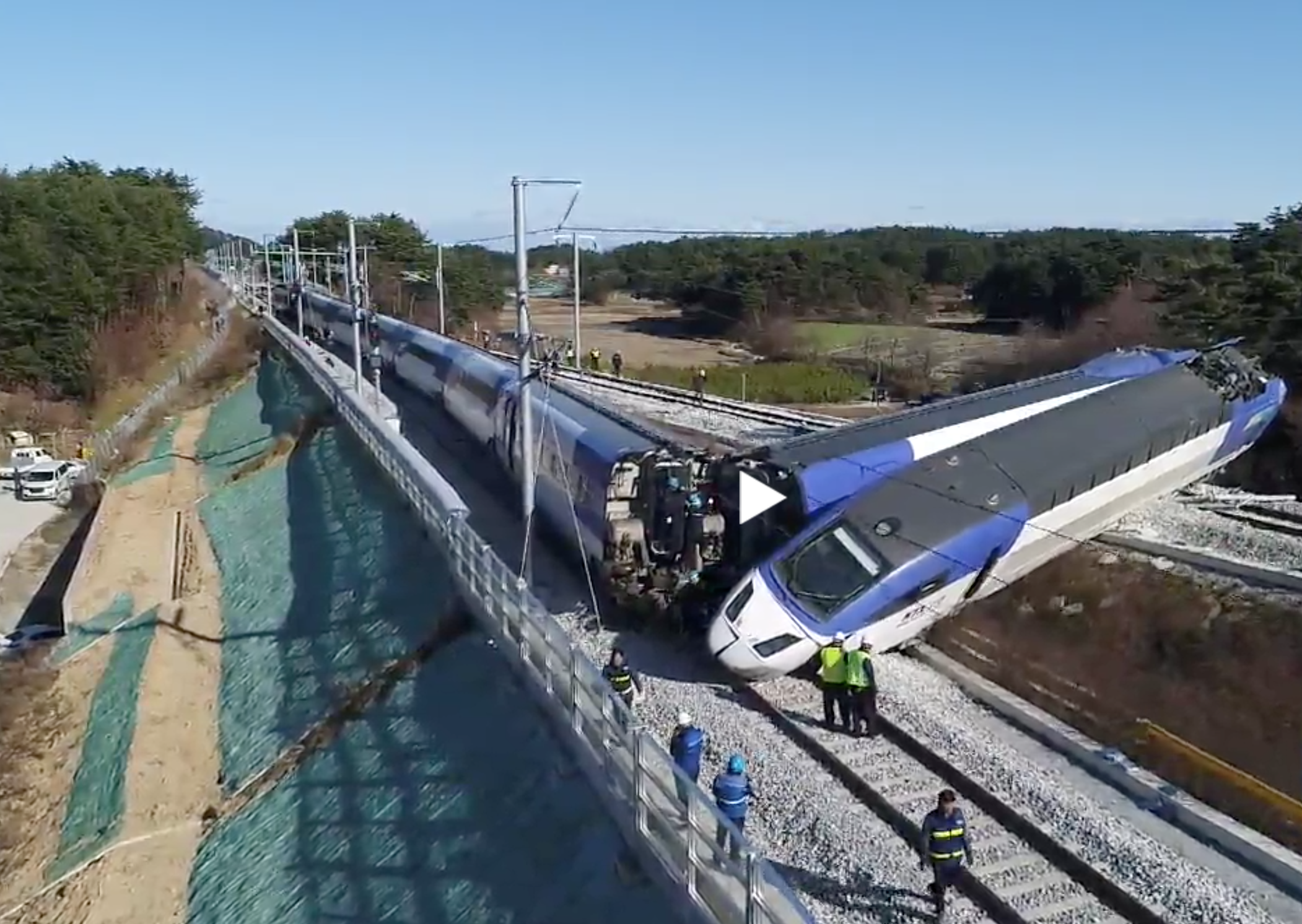
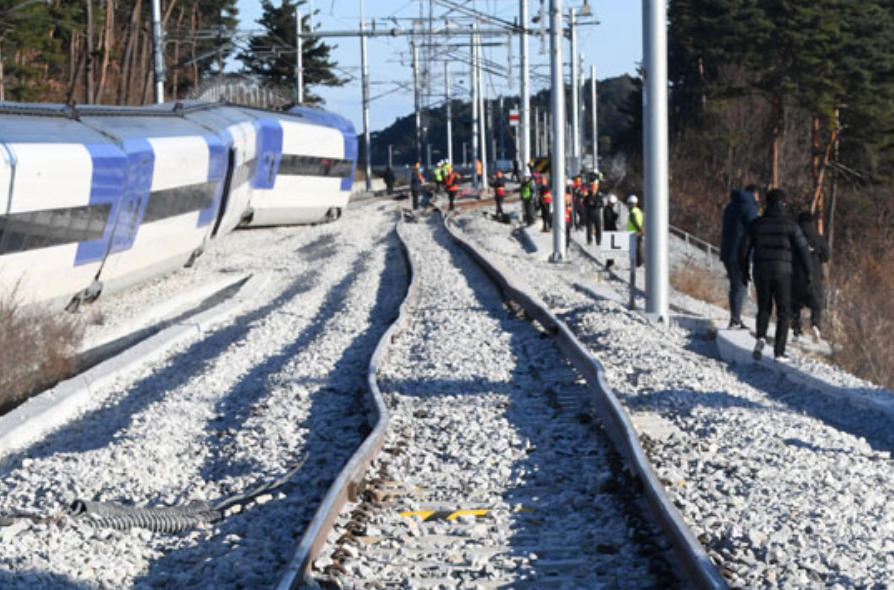
This morning a KTX [high-speed] train departing from Gangneung, bound for Seoul, derailed. As a result ten passengers and service staff were injured. The scene of the accident, in Unsandong in Gangneung city, is situated between Gangneung and Jibu stations. Ten cars in total derailed. Additionally, we can see that the rail and electric line is damaged for 200 metres. The accident occurred at about 7:35am, just after the train departed from Gangneung. The train, number 806, suddenly jumped off the rail, with 198 passengers and 3 staff inside. After the accident 15 staff and passengers have been rushed to hospital, with around 140 passengers being brought to Jinbu station, from where they were transferred to the 10:15am service to Seoul, Korail reported. The Air and Railway Accident Investigation Committee is on the scene to investigate the cause of the incident. O Yeongsik, Korail’s president, said today that the derailment is thought to be due to rail movement caused by temperature dips, but the exact cause of the accident must be investigated. 250 workers have been mobilised to restore the train line. Heavy equipment is being used to shunt the displaced rail cars off the line. Korail is planning to recover the damaged railway tracks by the morning of the 10th, but the work is not easy due to the complexity of the track at the accident site. KTX will be shut down between Gangneung Station and Jinbu Station until the recovery and repair work is complete. KORAIL is [continuing to] transfer passengers from Gangneung Station to Jincheon Station by transferring alternative buses.

Analysis: This incident will be profoundly shocking for Koreans. Their network of high-speed KTX trains is world-renowned for its safety, efficiency and value for money, and this is by far the most serious accident to involve the KTX nextwork; the only comparable incident was in 2011 when a train bound for Busan from Seoul derailed at Gwanmyeong in Gyeonggi province, lightly injuring one passenger.

Comms inconvenience due to KT fire continues… internet coverage restored to 97%, phone coverage restored to 63%

KBS News

By Ee Saeyeon

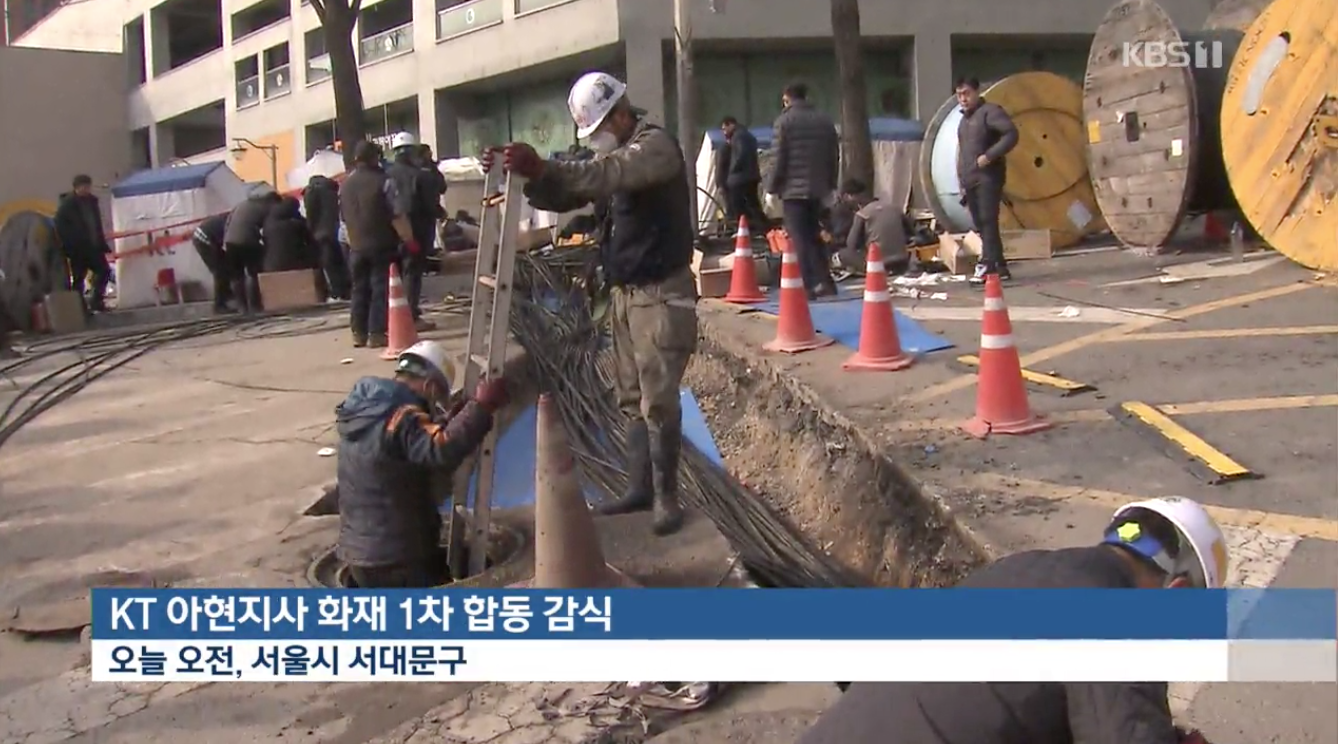
Reports confirm that around 79m of underground cabling has been lost at the Seodaemun KT building in [central] Seoul. Complete recovery is estimated to take quite some time, and so communication problems in the area will continue.

Police and fire service representatives reached an initial consensus on the fire, which took place in the underground communication area of ​​the KT Anhyeon branch office building. Police and firefighters have confirmed that they have lost about 79 meters of underground communications area as a result of their first inspection this morning. The fire has meant communication disruption for users in Seoul in Jung-gu, Yongsan-gu, Seodaemun-gu, Mapo-gu, and Eunpyeong-gu, continuing up until now. In the KT’s wired and wireless telephones, Internet and IPTV services are not working properly.

Card payment terminals using the KT network are also acting inconsistently, causing confusion for merchants and customers. The Seoul Metropolitan Police internal communication network has also suffered from a disability. Police said their telephone lines and [emergency number] 112 communication system in Seoul’s Seodaemun, Yongsan, and Mapo police stations were disconnected at one point in the morning. “[However] we have had no problem with the receipt of citizens’ 112 reports,” [a spokesperson] added.

KT commented that 63% of mobile phone base stations and 97% of internet lines, including those used for card payment, were restored at 6:00 pm today. Police and the fire department are planning to conduct a second joint survey tomorrow with the National Institute of Scientific Investigation to identify the exact cause of the fire.

Information given to Koreans regarding Canada’s legalisation of marijuana

Huffington Post Korea

By Heo Wan

On the 17th of October, the Korean embassy in Canada took the unusual step of disseminating some unusually stern information via Twitter. A tweet they published with the unusual subject matter of “illegal behaviour”, “the law” and “punishment” received 3,000 retweets:
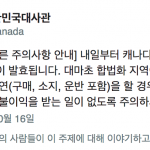


“[Information relating to the legalisation of marijuana] From tomorrow, recreational marijuana will become legal across Canada. Although using marijuana will be legal in Canada, Korean citizens must be careful that they will be not disadvantaged [by Korean law] for smoking, purchasing, possessing or transporting marijuana.”

From midnight on Monday the 17th, marijuana consumption has been legalised across Canada. Canada is the first G7 country and the second country in the world after Uruguay to legitimise marijuana usage.

The Korean government, including the Korean Embassy in Canada and the police, has been busy. The [Korean] Consulate General of the State of Toronto held a meeting with [Korean] international students and youth related to the legalisation of marijuana for recreation on the 19th of October. The meeting was attended by agents, education officials, and tourism industry officials. [A press release said]:

“Minister Jeong Taein invited attendees to encourage overseas Koreans to view marijuana as a curiosity in Canada and not to be punished under Korean law. Also, Song Yuntae, a lawyer specialising in criminal law and Gim Hae, the counselor of the Canadian Women’s Association of Canada, undertook a Q&A session explaining the contents of the law legalising illegal marijuana in Canada.”

The consulate general also posted a notice, “Safety Travel Information”:

“Marijuana legislation has been implemented across Canada since October 17, 2018. However, this only means that it is allowed in Canada; marijuana use is still illegal in the laws of the Republic of Korea. If Koreans are caught in Korea as having been involved in possession, purchase, cultivation, sale, transportation, or consumption of marijuana in Canada, they will be subject to severe criminal penalties for violating the law on drugs. Also, if Korean citizens or ethnic Koreans sends marijuana products to Korea by express mail or postal mail, both the sender and receiver are subject to investigation.

Our government is going to carry out a special inspection for passengers and express mail and mail to / from Canada. So, you people in Canada or visiting Canada are curious about buying, possessing and using marijuana products. Please be very careful not to be punished severely.”

Anyone with a Korean nationality in any country should not violate Korean drug laws. In Korea, marijuana is legally prescribed as ‘drug’. (Article 2 of the Act on the Management of Narcotic Drugs) The British Guardian and the New York Times (NYT) analysed the Korean government’s response to the legalization of marijuana in Canada. “Smoking Marijuana Is Legal in Canada, Unless You’re South Korean” is the title of the NYT article.

“The details of how the police will crack down on those returning from Canada are still unclear,” the Guardian said, discussing the fact that in Korean law “those who smoke marijuana can receive a maximum sentence of five years.” The Guardian also reported that “according to government data, there are about 23,000 Korean students in Canada. 293,000 people visited Canada in May, “while 1044 out of the 8887 drug traffickers arrested in South Korea were marijuana-related criminals.

Additionally, not only Korea, but also China and Japan have published cautionary warnings to their citizens concerning marijuana in Canada. The Consulate General of Japan in Vancouver, Canada, announced on April 4, “Legal possession of marijuana and smoking can be punished.” China warned its citizens that they can be punished under domestic laws that prescribe marijuana as a drug.

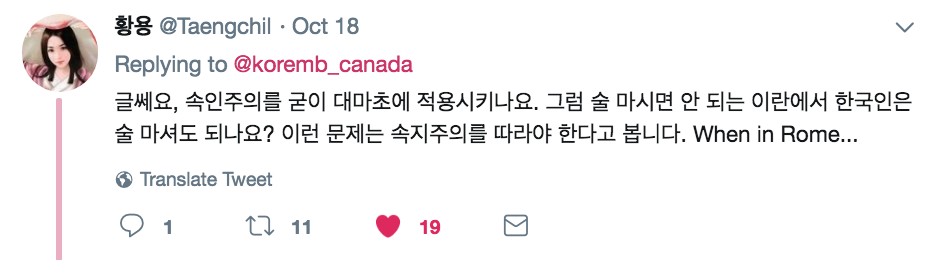
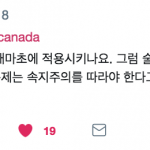
Analysis: This article highlights one of the most fascinating aspects of the Korean legal system: Koreans can be (and have been) prosecuted for performing acts in countries where they are legal, but those same acts are illegal in Korea (for example, gambling is highly regulated in Korea, and it’s illegal for Koreans to gamble elsewhere). Essentially, Koreans are subject to Korean law wherever they are in the world. Such a stance is arguably itself illegal under international law. The reaction to the tweet from Korean speakers was broadly scornful, although some thanked the embassy for seeking to protect Koreans abroad:

 

President Mun returns from trip to Europe, states “there is a growing consensus around peace on the Korean peninsula”

KBS News

21st of October 2018

By Gim Gihyeon

Queen Magritte of Denmark and President Mun.

President Mun returned to Korea after completing his visit to five European countries. President Mun has focused on expanding the consensus of the international community around the Korean peninsula peace initiative, as well as publicising UN sanctions on North Korea.

President Mun Jaein arrived at Seoul Airport on the Korean presidential jet as he finished his 9-day trip to Europe. He met with French President Macron, while his meeting with Pope Francisco was cancelled. He also met with UK Prime Minister Teresa May and other senior leaders from around the world at the ASEM forum. President Mun received a positive response to Gim Jeongeun’s invitation to North Korea and received strong support for the peace process on the Korean peninsula.

In a meeting with the French and British leaders, who are permanent members of the UN Security Council, they reviewed ways to promote denuclearisation through relaxing sanctions on North Korea – in the context of North Korea being on the verge of nuclearisation. While the European leader reportedly highly appreciate Mr Mun’s efforts to denuclearise the Korean peninsula and usher in peace, Mr. Mun did not give an answer to their specific proposals.

The President’s spokeperson said that President Mun clarified the necessity of promoting North Korean denuclearisation by mitigating sanctions against North Korea. Prior to returning home, the President visited the Queen of Denmark, Magritte, as part of a summit with Danish Prime Minister Rasmussen. Duringt he summit the leaders agreed to expand economic and cultural exchanges and Denmark confirmed its full support for peace on the Korean peninsula.

Today remains of Gim Changho, the expedition leader and 8 others were retrieved from the mountain in Kathmandu

KBS News

14th October 2018

By Song Geumhan

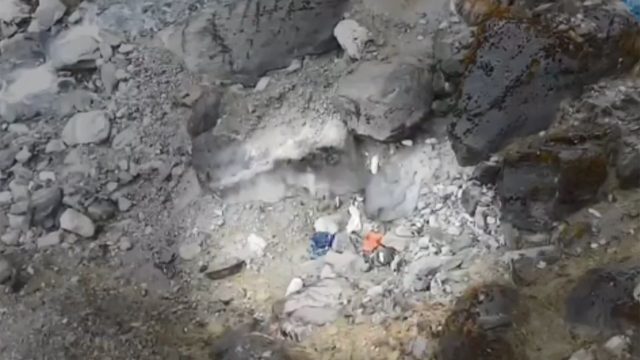
The bodies of all of the Korean climbers who perished during an expedition in the Himalayas have been recovered. The Korean embassy in Nepal revealed that the Nepali guide and Korean crew’s bodies have all been retrieved, with six of the bodies being moved the nearby town of Gurjukani. It’s being reported that the remining three bodies were located in areas which were difficult to approach, and are being transported to nearby villages by helicopter.

The leader of the rescue team stated: “The weather conditions in the accident scene were good and the work was relatively smooth. Today we plan to bring all nine of the recovered bodies to [Nepali capital] Kathmandu.” An embassy official said that documents related to the remains will be processed in Gurjukani. An additional large helicopter will be put into service at the nearby Pokhara airport. The Ministry of Foreign Affairs said it is in close consultation with the local police and other agencies about identifying the remains. In addition, they plan to dispatch two members of their foreign correspondence department quick response team tomorrow, with plans to support family with funeral procedures and visits to the locale.

The Shim Jae-cheol incident – “oppressing the opposition” vs “self-harm”

By Gim Bichira

KBS News

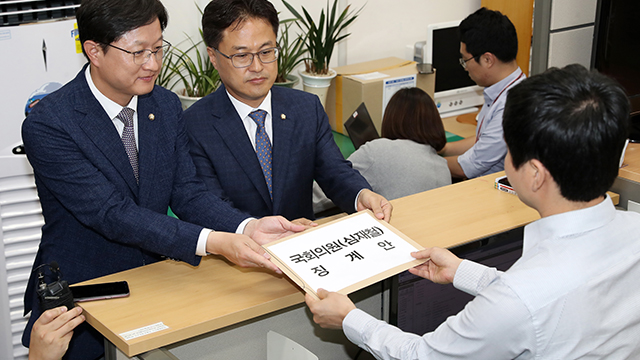
The opposition Democratic Party and the Liberal Democratic Party continued their intense work together today (29th) on the weekend, amidst the controversy over unauthorised administrative information leaked by the South Korean MP Shim Jae-cheol. A Democratic Party spokesperson said, “It is difficult to confront the fact that 30 members of the Korean National Assembly visited the Chief Justice of the Supreme Court and had a warrant issued by the first judge. It is difficult to say that this is a reasonable response; this a brazen [politically-motivated] act which damages the independence of Korea. Furthermore, the Korean government is trying to paralyse the entire regular parliament session by using this issue.” He continued “questions around government and state audits are one of the most important functions of the parliament itself, It is a perfect opportunity to establish the role of an alternative party. ” In the meantime, he urged the Korean government to cease self-harm by trying to paralyse the entire schedule.

The Liberal Democratic Party (DPRK) also commented, saying “the President’s office’s claims that the government’s expenses information is a national secret is mere sophistry. Hunting down and suppressing members of parliament who have secured data through legitimate procedures is [quite simply] oppression of opposition without precedent.”

Yun Yeongsuk, a senior spokesperson, commented, “if there is a problem in executing the government’s business promotion expenses, taxpayers should be informed; they have a right to know.” The details of the government’s business promotion expenses are regularly reviewed by the Board of Audit and Inspection and “they are materials that should be checked and monitored as a responsibility of the members of parliament. [Shim Jae-cheol] is a member of the legislature and should supervise the administration as a whole [so his actions were justified]. [This government] lacks basic knowledge about the division of the three powers and the functions of the members of the parliament. We will respond to repression to the end.”

Analysis: this is currently an importan news story in Korea, and closely echoes the UK’s expenses scandal of 2009. Shim Jaecheol, an opposition member of parliament who also holds the First Deputy Speaker position, has released some potentially embarrassing accounts revealing that prominent government figures including President Mun Jaein have rather bizarrely claimed meeting expenses of between 100,000 and 250,000 – simply for doing what many people see as their jobs. In response the government has sought to suppress the release of the information, eliciting a strong response from opposition parties.

How much gift money is appropriate to give to my nephews and nieces?

23.09.2018

By Byeon Giseong

KBS News

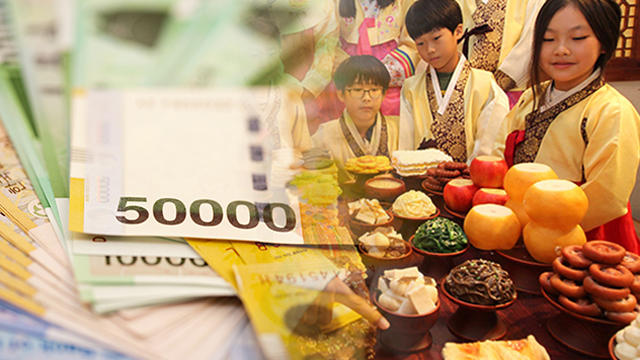
What were fun holidays as a child have become a stressful day as an adult, due in part because of my sense of obligation to give my nephews and nieces a few extra pennies. So, how much is appropriate for my nephews and nieces? There are two main schools of thought:

1-3-5-7 or 3-5-7-10. That is, start at ₩10,000 (£7) and work your way up to ₩70,000 (£48) as they age, or begin at ₩30,000 (£21) and work your way up to giving out ₩100,000 (£68). The amount given out won’t be the same for preschoolers and high school students – usually, the amount of money depends on their school stage.

First of all, there is the method of starting from ₩10,000 and going up in odd numbers to ₩30,000 and ₩50,000 won. If I were to give ₩10,000 to my nephew, who hasn’t started school yet, it would be along the ‘1-3-5-7’ principle that goes up to ₩30,000 for elementary school students, ₩50,000 for middle school students and ₩70,000 or high school students. If you think 10,000 won is a bit stingy, you could use the 2-3-5-7 method, starting from ₩20,000.

Some people argue, though, that it is appropriate to start from ₩30,000 won, considering the inflation rate. You could even start from ₩50,000 won. By starting with ₩50,000, I got more persuasive power [over my nieces and nephews].

Analysis: one of the most popular customs (for recipients) during the autumn Chuseok festival is yongdon (용돈/-) – when older relatives give younger family members money in red envelopes. Although Koreans usually translate the phrase as “pocket money” the word seems to signify one-off gifts at special occasions more than a weekly amount. Shops sell a variety of special envelopes, particularly around Chuseok and Seollnal, the solar new year festival in February. Typically, junior family members will make the most formal type of bow, prostrating themselves with their forehead flat against the ground in front of the senior family member, and will then be given their money. The age hierarchy in Korea means that very few people would question the convention of younger children receiving less than older ones. Korean language learners sometimes puzzle over the fact that while there are so many gender-specific words for different relatives in Korean, there’s only a single gender-neutral noun, joka (조카/侄子), to decribe both nieces and nephews. The formulation 1-3-5-7 also reflects the Korean method of counting in blocks of , “man”, or 10,000 – so 70,000 is expressed as “7 ten thousands.”


Temperatures in Seoul hit 36.9°c, the highest in 94 years – hot weather and tropical storms set to continue

21.07.2018

KBS News

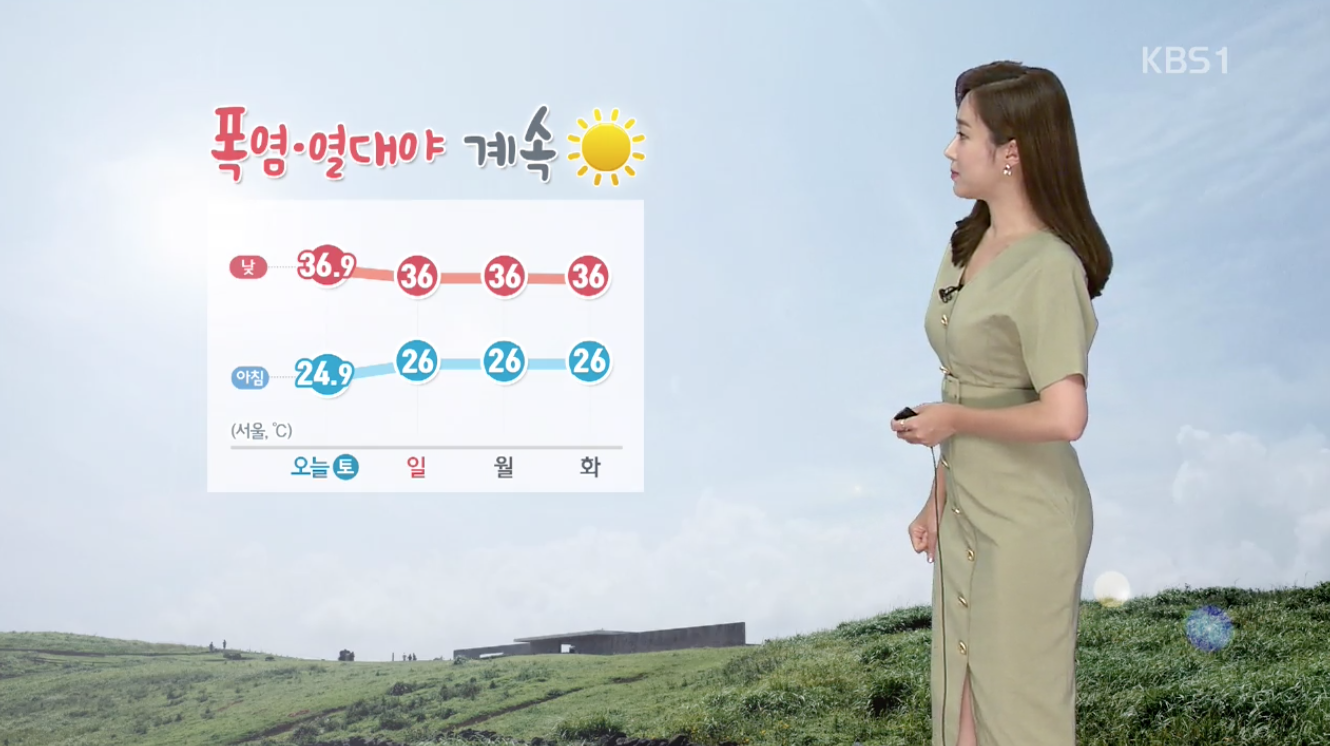
Today the weather is even warmer than yesterday. Typhoon Ampil is pushing hot air towards the Korean peninsula, so making the heat wave even more severe. Temperatures in Seoul today hit 36.9°c, with the heatwave and tropical storms expected to continue. As things stand, night-time temperatures in Seoul are expected to hit around 25°c with highs of 36°c during the day. There are almost no clouds in the sky to cover the sun. Yesterday the entire country experienced sunshine, with the exception of Jeju which had some light rainfall from early morning. The air pollution index was rated as “normal.” The dawn temperature of 26°c in Seoul, Busan and Gwangju was slightly higher than yesterday. In comparison the midday temperature in Seoul was 36°c, compared with 35°c in Gwangju and 37°c in Daegu. Due to the indirect influence of typhoon Ampil Jeju’s north coast may experience violent waves up to 8m high. Next week it will be clear and hot without rain.

Minimum wage to rise to ₩8,350 an hour – 10.9% increase from this year

14.07.2018

By Ee Seongcheol

KBS News

[Government has] decided that the current minimum hourly wage of 7,350 will rise by 10.9% next year to ₩8,350. It marks the first time in the thirty years of Korea’s history of a minimum wage that the rate will rise above ₩8,000. The National Minimum Wage Board announced today at 4am from their offices in Sejong City. [Sejong City is a purpose-built government city located Daejeon in the central Chungcheon province.] The rate has been set at ₩8,350 for public employees and ₩8,680 for private employees. Among the 27 members of the voting committee, 14 were members of a public interest committee and 5 people were members of the Korean Confederation of Trade Workers.

In order to keep the minimum wage to 10,000 won by 2020, it is necessary to increase the annual salary by 15% or more every year. However, user committee members who were absent from the meeting criticized the workers and members of the public interest that the high rate of increase was achieved despite the deterioration of the economic situation. Workers’ committees criticized that they needed to raise 15.3 percent to reach the minimum wage of 10,000 won by 2020, but that they did not meet expectations.

Analysis: ₩8,350 is £5.60 ($7.40) – considerably lower than the UK minium wage for over-25s of £8.75. Korea’s hyper-urbanisation means that the cost of services like public transport, restaurant food and utilities is considerably cheaper than the UK, but other things like supermarket food and consumer durables can be surprisingly expensive. Korea regularly tops charts for supermarket food expense.