Election agency to announce election date

12.03.2017

KBS News

By Gim Seongsu

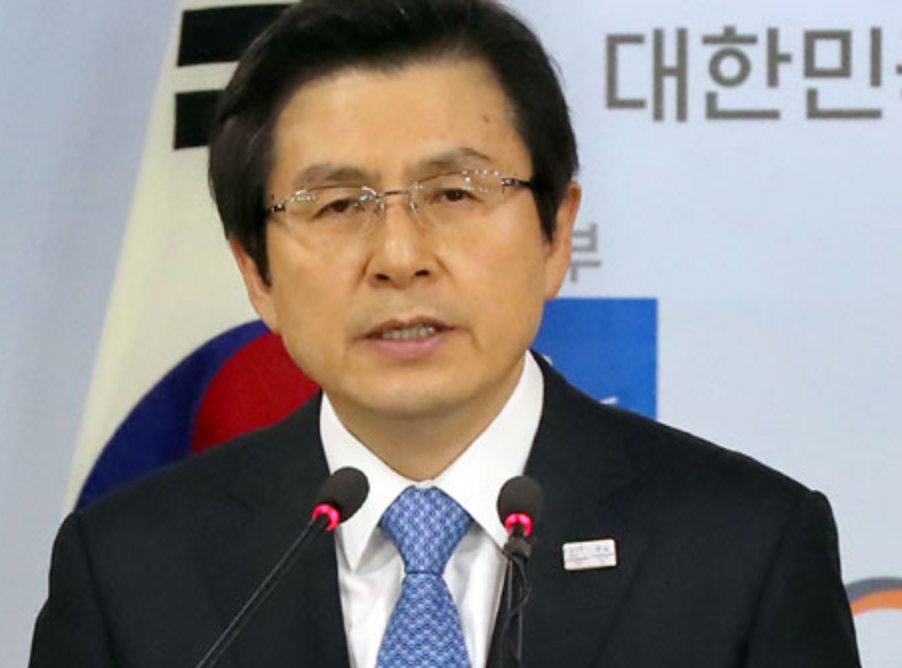
Acting President Hwang Gyoan announced today that he is expecting the election agency to announce a date for the forthcoming election this week. In a phonecalle to KBS he said “we are looking towards declaring a date for the election within the coming week” and “the deadline for the announcement of the election date is within ten days of any impeachment.” If the Ministry of Government Administration and Home Affairs appoints an election date and reports it to the Hwang administration, the Hwang administration will then determine the election date based on this.

It was also reported that the Cabinet will hold a cabinet meeting and vote on any proposed election date. Although there is not clear legal basis for election by the Cabinet, it is important that the election day be designated as a temporary holiday. Article 68 of the constitution states that “when a president vacates their position, or when an election is invalidated, or when a president is disqualified due to a judgement or other reasons, their successor shall be elected within 60 days”. This deadline would bring us up to May the 9th, 60 days from when former President Bak Geunhye was removed from office on

Defence makes its last argument

26.02.2017.

KBS News

By Ee Seungjae

Video at link

On December 9, last year, the National Assembly voted in favor of the impeachment proposal [against President Bak Geunhye] and submitted a final proposal to the Constitutional Court. At the end of the three days of preparations, the first day of the debate took place on the 3rd of last month, and discussions were held twice or three times every week for 55 days. The President’s defence has applied for 29 witnesses and the National Assembly [ie prosecution] has applied for 12 witnesses, including three witnesses who both sides sought to call as witnesses. Of these, 27 were called to the witness stand.

After the fierce closing arguments of both sides, the last remaining issue is the final defence tomorrow (27th), which begins at 2pm.

When the final defence is held, the presiding judges will briefly ask if additional evidence will be adopted before entering the final statement immediately afterwards. The President and the President of the National Assembly will appear on both sides of the podium to make a final statement regarding the impeachment of President Park. The National Assembly plans to call four representatives every 15 minutes.

During today’s proceedings Kwon Sungdong, chairman of the National Assembly’s impeachment committee, first explained why impeachment is necessary. Then, lawyer Hwang Jungkeun, the head of the general assembly of the National Assembly, gave a concrete reason for impeachment. When the National Assembly statement ends, the President will make her final statement. There is also a high possibility that one of the President’s lawyers, whether it is Seo Seonggu or Kim Pyeongu, will make statements too. The President’s lawyers say that they represent the President individually, and that they will talk about what they want to emphasise, without any time constraints.

Ree Jeongcheol* entered [Malaysia] 6 months earlier – “his role was to make contact [with Gim Jongnam]

19.02.2017

KBS News

By Gim Yudae

Video at link

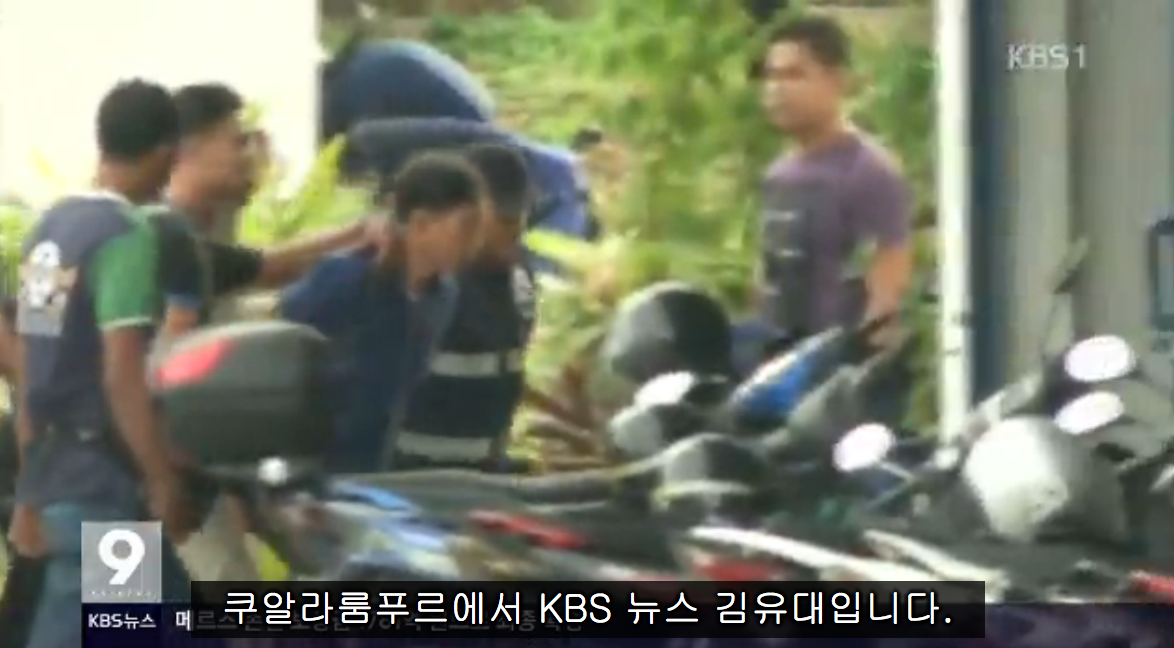
Ri Jeongcheol being led away by Malaysian police.

Detained suspect Ree Jeongcheol and other absconded North Korean suspects [in Gim Jongnam’s murder] entered Malaysia six months ago. They were sent to a safehouse where they prepared for the assassination.

Reporter: He was seized by police making a surprise raid and didn’t resist. The atmosphere at his apartment now is quiet, here in front of the spot where Ri Jeongcheol was seized by police. Entry into the apartment building is now controlled, but I was able to enter with the co-operation of a local resident. It looks like the police opened this door at the time of the raid. There seems to be no-one inside now. The door was firmly closed at first. These apartments are used by the middle classes and cost around ₩400,000 [£280/$347] per month. Through running an IT business Ree Jeongcheol maintained a high standard of living. Given that he maintained his family here with him [in Malaysia] it is not understood how he managed his living expenses. A person who lives in the same apartment block said: “He was living here with his wife. They appeared to be a normal, standard family.” [Yet] because the apartment here is not just an innocent family home, the local media see it as a safehouse for North Korean agents. Another resident of the block said: “There are a lot of restaurants and apartments [in the area? In Kuala Lumpur? In Malaysia?] and a lot of different ethnicities. A family from North Korea wouldn’t stick out as anything different.”

Ree entered Malaysia in August of last month. Just ten minutes outside of the city centre and 40 minutes from the airport, the apartment is conveniently located for local liaisons. It seems that [the assassins] used the cover of being IT company employees to disguise their identity, and they prepared the crime by attracting Vietnamese and Indonesian women in the field.

*Ree’s name, 리정철, follows North Korean orthographic conventions. The surname 리/李 (“Ree”) is typically written and pronounced as 이 (“Ee”) in South Korea.

The North’s final goal: “Possibility of using solid fuel”

12.02.2017.

KBS News

Gim Gyeongsu

Video at link

Last year in October in North Korea’s North Pyeongan province, in the area round Banghyeon, a satellite was photographed. A runway and flight facilities and an aeronautical factory were all captured on film, alongside more than 300 unmanned drones.

Particularly as the Banghyeon adjoins the West Sea [ie opposite China], it may have been chosen as a launching site to reduce the burden placed on North Korea’s east coast [by Japanese/US defence scrutiny]. The North Korean military fired two missiles in October last year, and so the South Korean military has been observing the North Korean east coast. Although the recent missile tests have involved flights of just 500km, it’s believed that they have been in preparation for the development of a more advanced class of missile which can fly 3,000km. Firstly these missiles have a higher speed than the Mach 9.5 of the earlier Nodong class. Additionally, our analysis is that the higher speed, altitude and range of these missiles is intended to reduce the time spent over Japanese territorial waters and lessen the chance of the missile being intercepted.

In particular South Korean military authorities will be looking to discren whether the new missile used solid or liquid fuels. Solid fuel, unlike liquid fuel, is much more of a threat as firing can be prepared clandestinely – there’s no need to expose the fuel injection process.

Our supposition is that North Korea is seeking to develop an ICBM in order to assert its dominance. Yang Uk, a Senior Research Fellow with the Korean Defence Security Forum, said: “There was a test on the engine [used today] last year, and I expect that there will be more firings to come this year.” Experts say that North Korea’s goal is likely to be to continue with similar provocations in the near future, in order to improve the performance and stability of their solid fuel engine.

The wife of Gim Yeongjae admits: “President Bak underwent surgery”

05.02.2017

KBS News

By Ee Seungjae

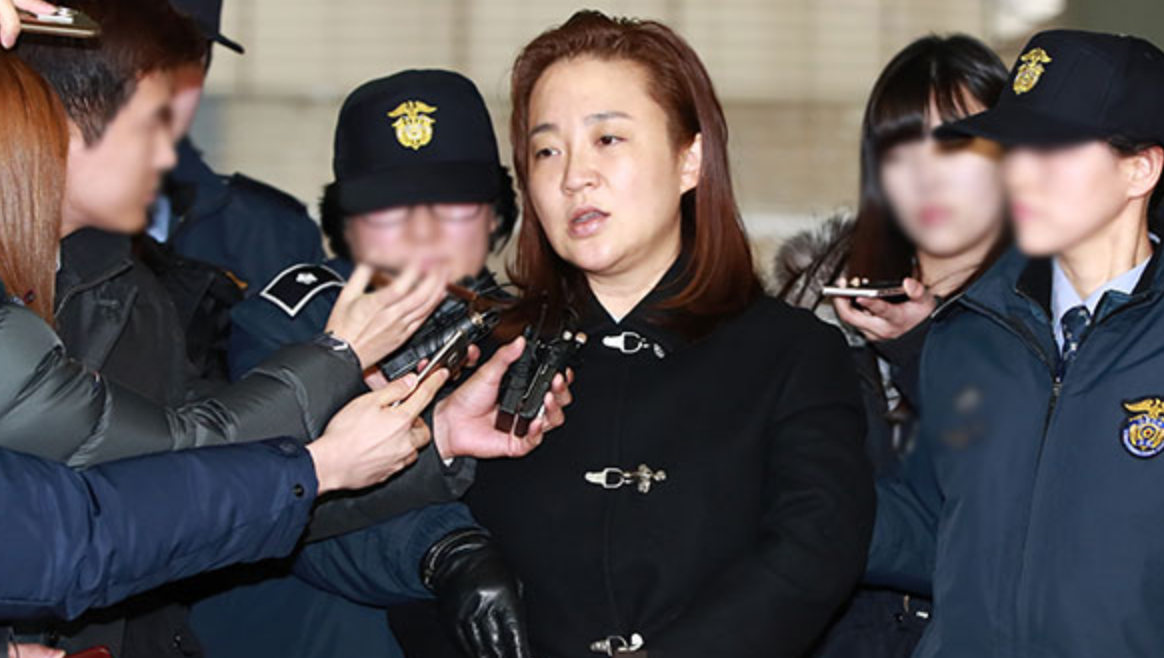
Today the wife of the plastic surgeon Gim Yeongjae, Bak Chaeyun, was re-summoned for questioning by prosecutors, after having been transferred to hospital yesterday before her scheduled interrogation due to complaining of having breathing difficulties. Bak, who had not answered any questions during her [brief?] attendance [at the prosecutors’ office] yesterday, today responded to questions from crowds of reporters before heading into the prosecutors’ office.

“My breathing is okay now,” Bak said. “I admit that President Bak had plastic surgery. If I were not to admit that, myself, my husband and our staff would all have been arrested.” But a member of the prosecution team said “of course we discussed the investigation with Ms Bak, but we didn’t make any progress towards the truth. Her comments are groundless. Yesterday as soon as she began to have breathing problems she was brought to the hospital.”

The investigation into Ms Bak is focused on what role her close relationship with President Bak played in favours being [potentially] given [to the President]. They will also be asking whether Choi Sunshil had any influence. The source believes that Ms Bak provided ₩25,000,000 [around £17,900/$22,000] to former Blue House executive An Jongbeom, along with a luxury bag and free plastic surgery. It is suspected that in return Ms Bak and her husband Dr Gim received ₩1,500,000,000 [around £1,000,000/$1,300,000] in R&D funding for the development of special medical facilities.

Analysis: the issue here is ostensibly corruption around providing surgery to the President and her aides, but of course the prurient detail that President Bak has apparently had plastic surgery is the main point of interest. As she’s fairly notorious for a relatively shabby personal appearance (an appearance which may have been directly overseen by Choi Sunshil) it’s unsurprising that Koreans are fascinated by this latest revelation in a case which continues to provide shocking details. Expect media outlets to now devote coverage to analysing photos of President Bak in order to pinpoint when surgery may have taken place.

Countdown to prosecutors obtaining a search warrant for the Blue House

KBS News

29.01.2017.

By Choi Junhyeok

Video at link

Bak Geunhye leaves the Blue House.

Next month Bak Yeongsu and his special investigative prosecution team will set a date for a meeting with President Bak Geunhye. On the 25th Ee Gyucheol from the prosecution team said “it is necessary to meet face-to-face with the President. Our aim of having completed preliminary investigations by the end of the winter period hasn’t changed.” Specifically, sources say that the schedule for the seizure [of evidence from the Blue House] is set for the second half of this coming week, just after the end of the New Year holidays.

In order to conduct a face-to-face interview with President Bak, firstly the Blue House must be searched and any evidence seized analysed. Once it’s been reviewed the prosecutor selects a particular place to be searched [again] confidentially. The Blue House’s private living quarters and medical area, the private secretary’s office and the office of state, among others, are all slated for search.

Securing proof of the investigators’ suspicion that President Bak accepted bribes and blacklisted political opponents is the core point of the application for the search warrant. A source close to the investigation merely said “we have not yet coordinated with the [alleged] defendants and the Blue House around the scheduling of the search.”

After President Bak is met with face-to-face the prosecution team will also reconsider whether to re-issue the arrest warrant for Samsong Electronics Vice Chairmen Ee Jaeyong, which had been dismissed.

Both Gim Gichun and Jo Yunseon detained on “blacklist” suspicions

21.01.2017

Gye Hyeonu

KBS News – video at link

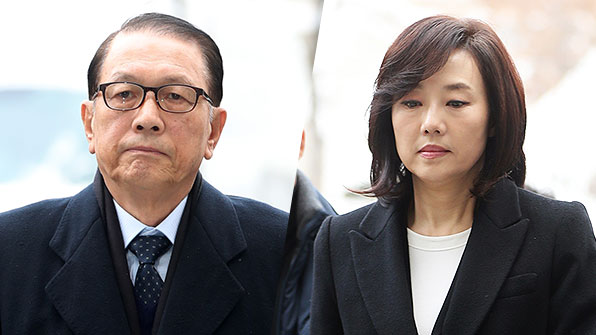
Gim Gichun (l) and Jo Yunseon (r)

The figures at the centre of the National Cultural Centre’s so-called “blacklist”, Gim Gijun and Jo Yunseon, have been simultaneously detained. Gim was previously the Blue House [ie Presidential] Chief Secretary and is thought to have been the plan’s instigator while Yun is the Cultural Centre’s Secretary. Today (the 21st) Bak Yeongsu, part of the special prosecution team, said that Chief Secretary Gim and Secretary Yun have been detained under suspicision of having used their influence abusively and of having committed perjury. At 3:40pm, arrest warrants were issued for Gim and Yun. Seong Changho, Chief Prosecutor at the Seoul Jungang prosecutor’s office, revealed that “there are concerns about evidence being destroyed.”

Yun has now become the first incumbent minister to be saddled with disgrace by the special prosecutor. Other high-ranking public officials who have had arrest warrants issued include former Secretary of the Ministry for Culture and Sport, Gim Jongdeok, Undersecretary Jang Gwanju from the Culture Centre and Shin Dongcheol, Secretary to the President for Political Affairs, along with Gim and Yun, making a total 5 people who have been arrested.

Gim held a role as the Presidential Chief Secretary from August 2013 until February 2015. During that period it is suspected that Gim drew up a list of cultural figures and artists who had expressed criticism of President Bak Geunhye’s administration. He is also under suspicion of having required resignation from members of his staff who did not want to cooperate with the blacklist. Both Gim and Yun are alleged to have perjured themselves by having given false testimony regarding the blacklist during a National Assembly investigation hearing.

It’s understood that both Gim and Yun deny the allegations against them. The Public Prosecutors’ Office has designated these alleged offences as serious and anti-constitutional, crimes which have infringed on free thought, free expression and the media. Drawing up and managing blacklists and intervening in the cultural and arts fields threatens the core values of free democracy.

The special prosecuting team said that the blacklist was bolstered to over 10,000 names thanks to criticism from people from all walks of life of the government’s weak response to the Seweol ferry disaster, which occurred on the 16th of April 2014.

Analysis: The Choi Sunshil affair continues to decimate the Korean establishment – it’s beginning to appear as if there’s no corner of Korean public life which will remain untainted. This particular allegation will be particularly damaging for Bak Geunhye’s adminstration as it amplifies the concerns around illicit government usage of cultural assets during the 2012 election, when teams of government-sponsored netizens flooded social media sites with comments supporting Bak and attacking her opponents. Expect Gim and Yun to be sacked and receive suspended prison sentences if convicted, along with a purge of pro-Bak personages within the various ministries and departments which have been implicated.

Special prosecutor files charges against Samsung Electronics head Ee Jaeyong relating to 43 billion won [$36.2 million] bribe

16.01.2017

KBS News

By Gang Byeongsu

Video at link

Today (16.01.2017) special prosecutors asked for a preliminary arrest warrant to be filed for Samsung Electronics vice-president Ee Jaeyong. The prosecutors arrived at this conclusion having worked nearly continuously for three days reviewing points of law. Ee Gyucheol from the prosecutor’s office said: “We have requested arrest warrants for violations of laws related to specific economic crimes, embezzlement, and testimony in the National Assembly.”

It was the investigations into Choi Sunshil’s intervention in national government affairs which first uncovered these suspicions regarding vice-president Ee. His takeover of the entire Samsung group is now on hold – as he is suspected of having bribed government figures through Choi Sunshil in order to smooth Samsung’s proposed takeover of Jaeil Industries. The prosecution team has surmised that President Bak and Ms Choi must have had some financial relationship and that vice-president Ee had bribed Choi.

Also being investigated, without detention, are vice-president of the Samsung Future group Choi Jiseong and other Samsung employees Jang Chunggi and Bak Sangjin. They were summoned by prosecutors before Ee. Ee’s wife has an appointment for the day after tomorrow (the 18th) at Seoul Jungang prosecutor’s office.

Analysis: The Choi Sunshil scandal continues to compromise influential figures. While this may seem extremely serious for Ee and Samsung, it’s almost impossible to overstate both the importance of Samsung to the Korean economy (and national psyche) and the amount of influence it has. Even if Ee is found guilty and jailed, don’t expect him to be gone from the national stage for long; his father Ee Geunhee, the Samsung group chairman, was found guilty of similar offences in 2008. He received a fine of $98 million and three years’ prison time, suspended. And while ordinary Koreans dislike the arrogance and corruption of the chaebeol families they also cherish their international reach and understand their importance to the national economy.

Korean house prices and grocery costs are the highest in the world

15.01.2017

KBS News

By Bak Jinwon
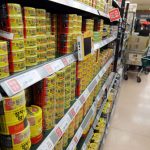
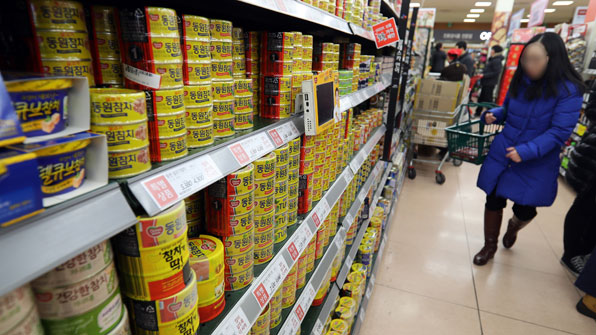
Domestically produced Dongwon tinned fish in a Korean supermarket.

Korean grocery prices and housing costs appear to be comparable with those in developed countries such as the US and Japan. Today (the 15th) the statistics site Numbeo released figures which show that Korean items such as fruit and rice are rated 12th most expensive globally, while city-centre apartment costs are reckoned to be amongst the top 10% among 119 countries surveyed. In particular, Korean bananas are the third-most expensive in the world, with a kilo of bananas costing $3.42, or around ₩4,000. The only countries where bananas are more expensive are Mongolia and Bermuda. Oranges, apples and tomatoes are also pricey, being the fourth-most expensive in the world, while Korea has the fifth-priciest rice and potaoes globally. Besides this onions, milk, cheese and beef prices are very high, being ranked in 6th place of all countries, while bread and cabbage prices are the highest in the world.

It appears as if housing costs are considered to be very high, too. City-centre apartments cost around $6,600 per square metre, placing them 9th globally for expense. Korea comes behind only a number of countries which are famous for their very high housing costs, such as Hong Kong, Singapore, Switzerland, Macao, the UK, Japan, Luxembourg and Sweden. China came in 13th place and the US came in 44th place. Rural apartments were found to cost around $3,600 per square metre, comparable to apartments in Taiwan. Monthly rent on a Korean one-room city-centre apartment was found to be around $536, rankng 41st, while monthly rent of $1,309 for a three-bedroom apartment was 37th-most expensive.

A cappucino in a café was ranked at 19th most expensive while the cost of a litre of petrol was ranked at 30th in the world for cost. A Volkswagen Golf was priced at 25th in the world for expense. The goods or services which were cheapest in Korea in relation to other countries were internet charges and McDonald’s meals.

Despite the fact that Numbeo tallied up their figures for food costs from amongst 19 separate sales locations, the only items which they found to be relatively cheap were water, alcohol and tobacco. Water and domestic beer were ranked in 38th place in relation to products sold in other countries, while a box of Marlboro cigarettes were ranked at 44th place amongst global prices.

Analysis: daily life in Korea is an odd mix of very affordable and very expensive. Some goods and services – public transport, taxis, restaurant meals, locall-produced alcohol and utilities – are very cheap, while supermarket shopping can be surprisingly costly. It’s often cheaper to eat a quick meal of traditional Korean food at a restaurant than it is to buy the same ingredients from a supermarket. And while some types of food which are staples in the west are luxury or niche items in Korea, like cheese, beef and bread, and are considerably more expensive. (I’m also rather shocked by the price of bananas in Bermuda. They can grow them!)

Blacklist NIS intervention – documents were acquired

04.01.2017

KBS News

by Jeong Hyeokjin

video at link

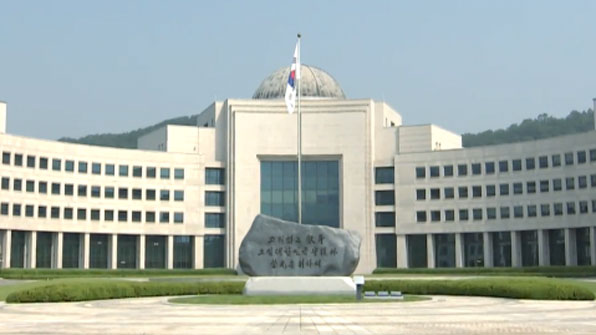
NIS headquarters, Seoul.

An official document is leading observers to assume that National Intelligence Agency drew up a cultural blacklist. The media has been given a copy of a two-page confession entitled “Leftism within the Urban Culture Organisation: the need to rectify deviant tendencies.” Part of this document presents claims that regional society has been contaminated by “leftism”, and so in order to push ahead with prosperity, the Urban Culture Organisation must get in the way [of this leftist tendency] and instigate specific management measures. The Board of Audit or the Ministry [of Culture] actually checked whether conditions could be normalised by cutting subsidies or bringing criminal charges and so on [against leftist elements] and utilise the help of the media to highlight any budget wastage by leftist elements within government departments.

Bak Yeongsu, a member of special prosecuting team, said that when he saw these documents he judged their style to be consistent with documents produced by the National Intelligence Service. Last month on the 15th was when the documents were first suspected to be very similar to documents produced by the National Intelligence Service, which is based in President Bak’s residence, the Blue House. The provenance of the document as being from the NIS was accurately confirmed by anti-forgery watermarks made up of large characters at the centre and small characters appearing at the corners. It’s [also] written in a mixture of Korean and English, a style of writing which has almost disappeared from other government departments, and it is written in Ming dynasty printing style, with the main body of the text written in Gothic text.

The special prosecutor will summon NIS officials soon to confirm the process of arraignment for prosecution and also how this document had been distributed.