
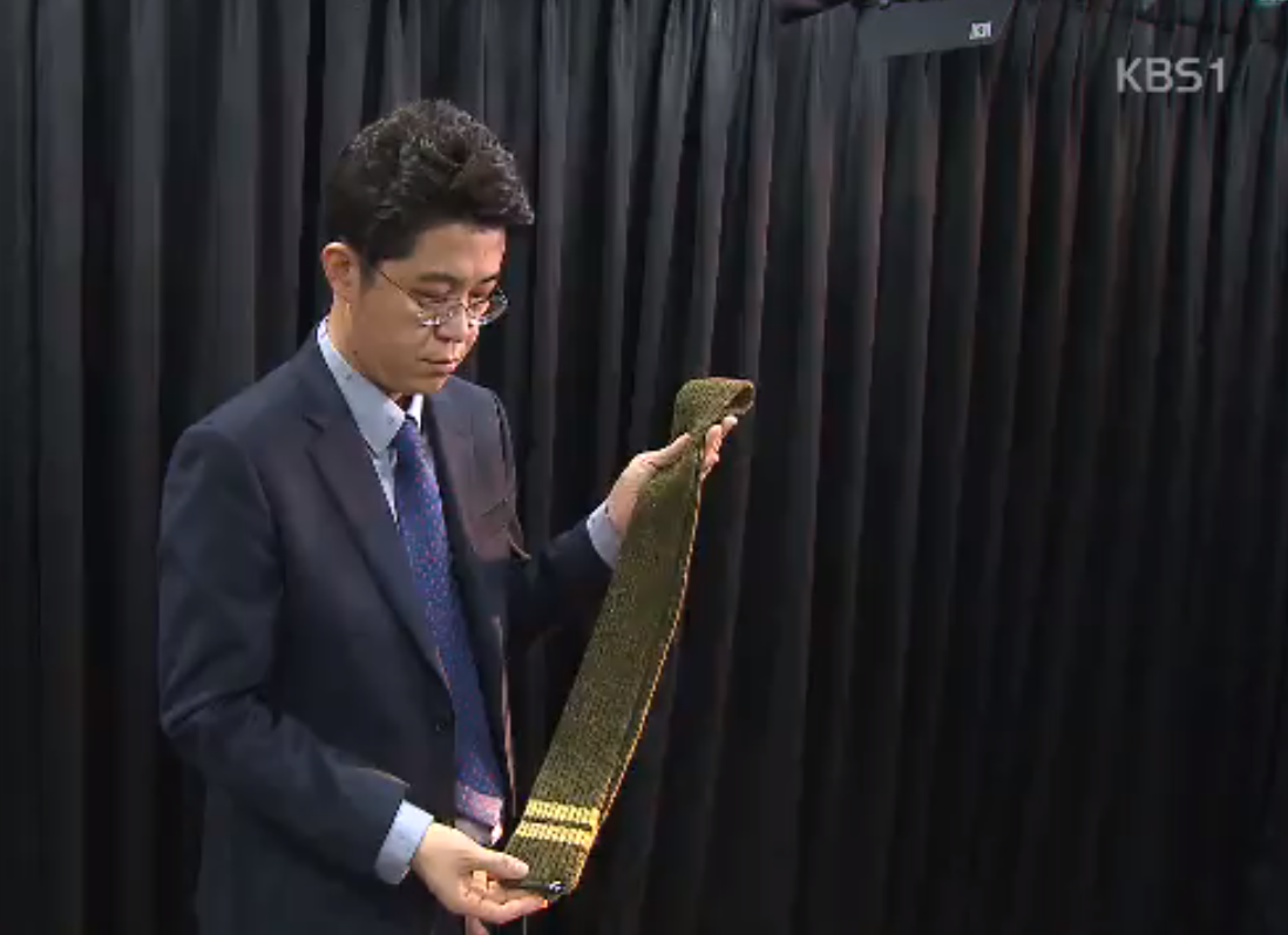
Controversy As Smaller Business [Accuses] “Major Fashion Firm” E-Land Of “Scarf Plagiarism”

Screen Shot 2015-12-11 at 7.43.38 PMKBS News – video

E-Land, a fashion firm with yearly sales of ₩10 trillion [around £2.7 billion], has been enveloped in a controversy, having plagiarised the design of some small- and medium-sized enterprises’ scarves. E-Land had promised to provide settlement money and incinerate the [plagiarised] items, but later changed its promise.

[Reporter] From the start of the second half of the year up until this month E-Land has been selling this scarf. However, this design, released a year ago by a smaller business, has almost exactly the same design.

[Representative of the specialist scarf company]: “The length, the width, the position of the stripes, and the size of the stripes, and the composition of the fibres – it’s all exactly the same.” The specialist manufacturer’s version costs ₩68,000 [£37.50], reflecting its development costs, while E-Land’s version sells for ₩23,900 [£13.20] – a third of the price. The [smaller] company’s annual sales of ₩200 million have taken a big hit.

[Representative of the specialist scarf company]: “It’s been very mentally stressful with retail and wholesale account customers ringing up complaining that the exact same product as their expensive scarf is on sale [for a cheaper price].” As soon as the smaller company complained E-Land sent a notice of agreement [합의안 = notice of compliance, perhaps?]. [E-Land] gave a settlement of ₩5 million [£2,700] and undertook not to violate [the smaller company’s] intellectual property rights again, and to remove from sale and burn all of the problem items.

However later, E-Land’s attitude changed.

[E-Land manager]: “If one looks at the photos, one can see that this scarf [designed by the smaller company] is awfully similar to a lot of other scarves from other brands.”

The controversy continues to engulf E-Land.

Analysis: This news piece highlights the curious disregard for intellectual copyright in Korea. Plagiarism is rampant in all spheres of commercial life – perhaps a legacy of the rote memorisation and subordination of creative endeavour which characterises Korean education. In recent years commercial plagiarism has been challenged more often as Koreans seek to protect their own innovations at home and abroad; to give a recent example an actress has been sharply criticised for copying a fashion designer’s work and passing it off as her own, and K-pop acts are constantly being accused of ripping off other people’s work. Many Koreans are anxious to move away from any perception of their country as one which churns out low-quality imitations.

(The fact that the complaining smaller company is not named in the report may be related to Korea’s idiosyncratic libel laws – even if your accusation is true, it can still be prosecuted as libel if it causes material harm to the entity who is the subject of the accusation. These laws were crafted for use as weapons by dictatorial administrations, but have never been repealed, possibly because they offer innate advantages to powerful and wealthy organisations.)
2,222 Make Up Funeral Committee For Moment of National Unity

24th November 2015

KBS News – video at link

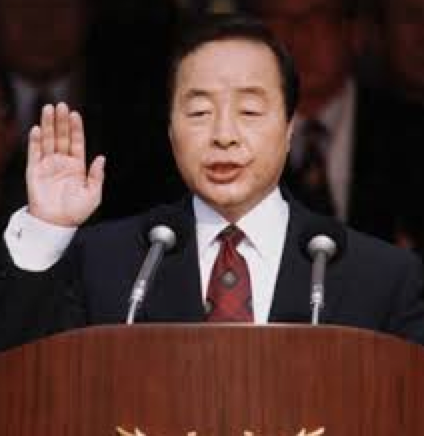
Screen Shot 2015-11-25 at 4.40.55 PMThe national funeral committee for the funeral of former Korean president Gim Yeongsam has been confirmed. Their function is to carry out the wishes of the deceased [with respect to his funeral arrangements] – membership comprises 2,222 persons. Former president Gim Daejung’s funeral committee was a similar size, being just over 2,300 persons. According to convention, chairman [of Gim Daejung’s funeral committee] will take over the role for the Gim Yeongsam funeral. Gim Bongjo, former Democratic congressman and Dong Jihoe, former Vice-President [of Gim Yeongsam’s party] was included in the entourage in accordance with recommendations from the bereaved.

During his term of office president Gim brought [former dictators] Jeon Duhwan and No Taeu to court to stand trial.

Director-General of the UN Ban Gimun has also been invited. 1,004 members of the committee who have been recommended are survivors [of Jeon Duhwan and No Taeu’s dictatorial violence].

Gim Hyeyeong, Director-general for State Protocol at the Ministry of Government Administration and Home Affairs, said “[we] have followed best practice with regard to construction of the membership list [of the funeral committee], having customised the invitee list to reflect the wishes of the deceased’s family.” As the first funeral committee for a national figure to include representatives from various fields of society, its focus has been on integration and unity.

Analysis: as Korea’s first fully-democratically-elected president, Gim Yeongsam holds a special place in the country’s heart. A lifelong opponent of dictatorial rule who made significant personal sacrifices standing in opposition to Bak Jeonghee, Jeon Duhwan and No Taeu, Gim is being deeply mourned by the general Korean public. This article shows the current government’s anxiety to ensure that no criticism can be levelled against them for underplaying Gim’s funeral or anodysing his legacy (the current president, Bak Geunhye, is the daughter of previous dictator Bak Jeonghee) – by publicising the list of members of the funeral committee, which includes others who suffered during Korea’s ling struggle for democracy and has been influenced by Gim’s family, the current administration hopes to head off any potential criticism of the proceedings. More broadly the article also highlights the fact that the funerals of public figures are open to exploitation by powerful influences.

1,500 year old Baekje wooden fortress uncovered

Naver News

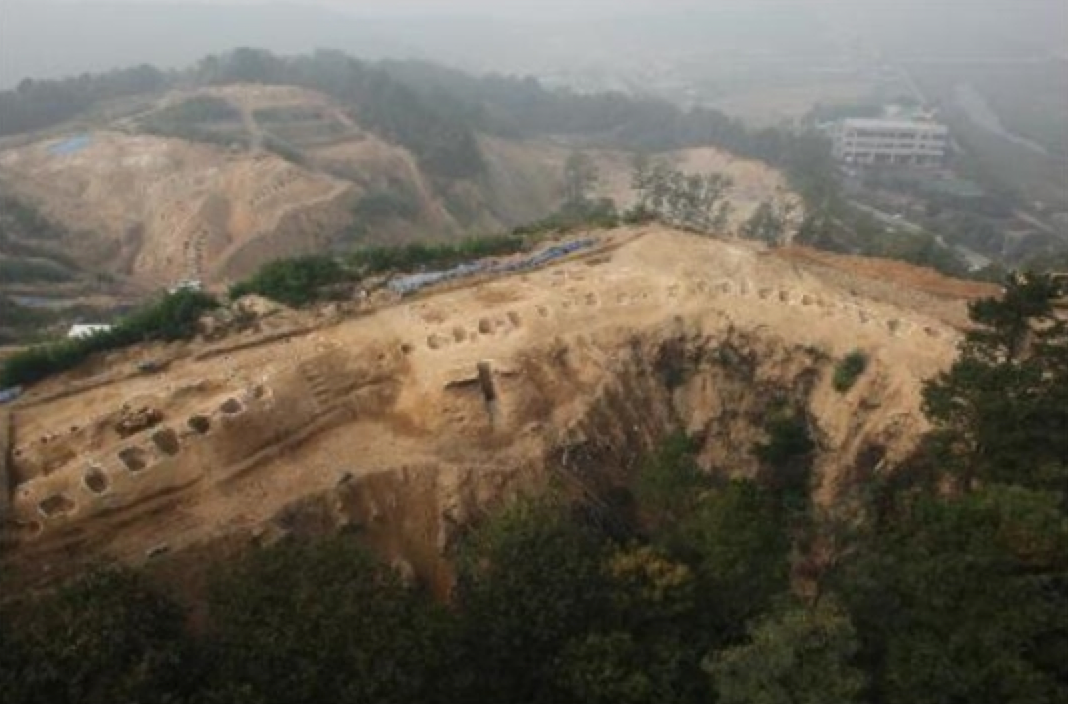
Screen Shot 2015-11-03 at 2.07.10 PMIn Anseong in Gyeonggi province a Baekje wood-walled castle, built between the 4th and 6th centuries, has been discovered. The fortress’ purpose was the block Goguryeo soldiers. Since September the Historical Culture Revival and Protection Association has been undertaking an excavation investigation in the neighbourhood of Dogi in Ansang city, with the result that traces were found of the barriers of the wood-walled castle.

The castle’s position abutting the foothills and the Anseong river provided defences, with 4 sections each running about 130 metres in length. [This structure] is one of the first heaped-earth fortresses with a framework made from the wooden stake barriers erected around it. Catching the eye is the interior built from a single row of earthworks and the exterior built from two rows of earthworks. The gaps between the laid woodpiles is around 4.5m – 5.5m. This toru style of earthwork is characterised by empty space dug behind it like a staircase, carved out of the outer surface of the hill – layered clay lumps [behind it] increase the strength of the wall.

Earthenware pottery, dishes and so on have been excavated from the mounds behind the fences, exhibiting the short neck and lid typical of the gupdari style from the 3rd-4th century of Baekje. A researcher said “up until the fourth century the framework and excavated remains are Baekje, but after this point a Goguryeo army seems to have occupied the castle; it has been possible for the first time to specifically gauge the structure of a Three Kingdoms barrier facility, so this ruin has been evaluated as being very important.”


Mother of the Itaewon Murder Incident [Victim] Speaks

Ee Bok-su, mother to murder victim Jo Jong-pil

Ee Bok-su, mother to murder victim Jo Jong-pil

22nd September 2015

Mother of the Itaewon Murder Incident [Victim] Speaks: “Evil people are living more happily than I am”

(Original post from Huffington Post Korea)

“I think I’ve been living waiting for this day to come,” said Ee Bok-su, mother of the victim, when she heard the news that cited perpetrator Arthur John Patterson, 36, had finally been brought back domestically [ie, to Korea] to pay for his crimes. “At first I thought ‘I have to keep living’, but I wasn’t sure if I could live for [even] two or three more years. In the end it seems like I held on because the case wasn’t finished.”

When Mrs Ee heard the news about Peterson’s repatriation, she said in a statement to Yeonhap News on the 22nd of September that “the killer came and killed, so he should pay the penalty. I don’t want to see him get the death penalty – yet he should get life imprisonment so that he does not kill anyone else out in society”.

Jo Jong-pil

Jo Jong-pil

Mrs Ee said of her sacrificed* [희생된] son: “he never fought during his childhood, not even once, and never once did a curse word cross his mouth… he had a promising future but the murder has ruined all of that”, she said, bursting with rage.

After the murder of Mr Jo [his] family have continually gone though hardship. The anger felt by Mr Jo’s father after the incident has increased but has not consumed him. He is still reluctant to speak about the incident. While Mrs Ee was dealing with the news of her sons’s death she also underwent hip surgery, and she also suffers from knee pain. “My child has been killed. Who could properly deal with that?” she sighed. If Patterson returns “I will definitely be at the court right up until the final judgement,” she said.

Mr Jo was found dead, having been stabbed with a knife, in a hamburger restaurant in Itaewon on the 3rd of April 1997.

Analysis: The Itaewon Hamburger Restaurant Murder (이태원 햄버거 가게 살인 사건) was a crime in 1997 which shocked Korea. A 22-year-old, Jo Jong-pil, was stabbed repeatedly in the toilet of Itaewon Burger King in an unprovoked attack, allegedly by 17-year-old Arthur Jon Patterson. (Itaewon is a central district of Seoul known as a hub for foreigners.) Patterson, a US-Korean dual national, fled to the US the day afterwards. Only now has he been extradited. Random violent crime in Korea is extremely rare (although the country has a significant problem with domestic violence) so the brutality of Jong-pil’s death has given the incident a grim persistence in the country’s imagination.

Arthur John Patterson

Arthur John Patterson