6 “Comfort Women” say: “the Korea-Japan Agreement Is Invalid, [We] Won’t Take Any Of The 10 Billion Yen”

Thursday January 14th 2016

Huffington Post Korea

By Gim Byeong-cheol


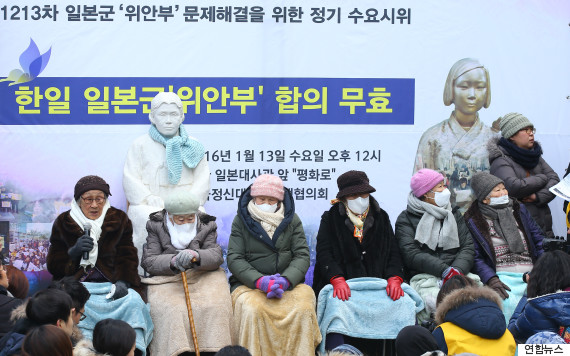
Korean victims of Japanese imperial sexual abuse, so-called "Comfort Women"

Korean victims of Japanese imperial sexual abuse, so-called “Comfort Women”

“Comfort Women” who were abused by the Japanese military have declared the

no images were found

agreement between Japan and Korea over their case to be invalid. According to Yeonhap News  a press conference was held at the Korean Comfort Women Issue Measures Committee shelter and Sharing House residence for “Comfort Women” victims of the Japanese military, opposite the Japanese embassy. At the conference the victims revealed that the government had not asked them for their input about the proceedings and they were “completely opposed” to any agreement being made with the Japanese government.


Gim Bok-dong, 90

Gim Bok-dong, 90


Gim Bok-dong, 90, said: “The government needs to solve the issue of ‘Comfort Women’ but we don’t know why they chose an impractical solution like this… we are not going to take any of [Japan’s 10 billion yen]. Our monument to the ‘Comfort Women’ [situated directly opposite the Japanese embassy], which we have paid for, every penny, was not made for the two governments to come to a [cosy] agreement.”

Ee Ok-seon, 89, said: “Hiding the victims and trying to silence them has to stop. It cannot go on any longer.” Today [Wednesday the 13th of January] around 800 police officers have been deployed to the weekly demonstration. [Surviving‘Comfort Women’ and supporters protest every Wednesday in front of the embassy.] Another atteendee at the conference in front of the statue said “this agreement between Korea and Japan is humiliating and will certainly rouse the Korean citizenry to action”.

Analysis: while Japanese and Korean lawmakers may hope that this agreement brings a definitive official conclusion to the so-called “Comfort Women” issue, clearly many (if not most) of those directly involved are not happy with the agreement which has been reached. After the ordeal these women were put through, it’s hardly surprising that an official agreement many decades later is unsatisfactory to them. It’s easy to criticise the sincerity of the Japanese apology, too; as recently as 2014 Japanese prime minister Shinzo Abe was still casting doubt on whether the imperial Japanese army had engaged in this type of abuse (here’s a KoreaNews story from October about a Korean-American student who had publically challenged him on the issue in May) and Abe has a long history of pandering to far-right Japanese groups. While he is currently politically strong enough to anger Japanese right-wingers by making this agreement, many Koreans feel he will quickly turn back to anti-Korean sentiments if and when he needs to. Park Geun-hye’s government, meanwhile, may have made a mis-step by failing to consult the victims and their support organisations about the agreement. With this agreement, however, the way is now much clearer for Korea and Japan to begin closer sharing of military information in light of North Korea’s renewed belligerence. This news piece also highlights the deep importance of symbolic gestures in North-east Asian politics; Japan finds the weekly demonstrations and statue highly embarrassing and for years has been putting significant pressure on Park’s administration to remove the statute and curtail the demonstrations.

Inquiry Into Radiactivity In Dandong And China As NK Bank Continues Operations

January 8th 2016

Video at link

KBS News

Screen Shot 2016-01-08 at 2.12.01 PMChinese environmental authorities have begun an inquiry into radiation pollution on the border between North Korea and China after North Korea’s nuclear test. Also, it KBS News has checked and confirmed through withdrawals [from the bank] that North Korea’s Joseon Gwangseon Bank is continuing to operate, despite the

no images were found

nuclear testing.

Dandong abuts two rivers on the border with North Korea, more than 420km away from the [North Korean] nuclear testing site, Punggyeri in North Hamgyeong Province, [Chiense] investigative environmental personnel have mobilised inspection equipment to measure [radiation] and check that everything is alright in response to public pressure. The Chinese environmental agency is taking the affecting influence [of the tests] very seriously but is only releasing very little information to the public.* A Chinese environment agency investigator said, in response to being asked what they were doing: “we are measuring.” [The Chinese investigator is questioned and replies in Chinese in the video.]

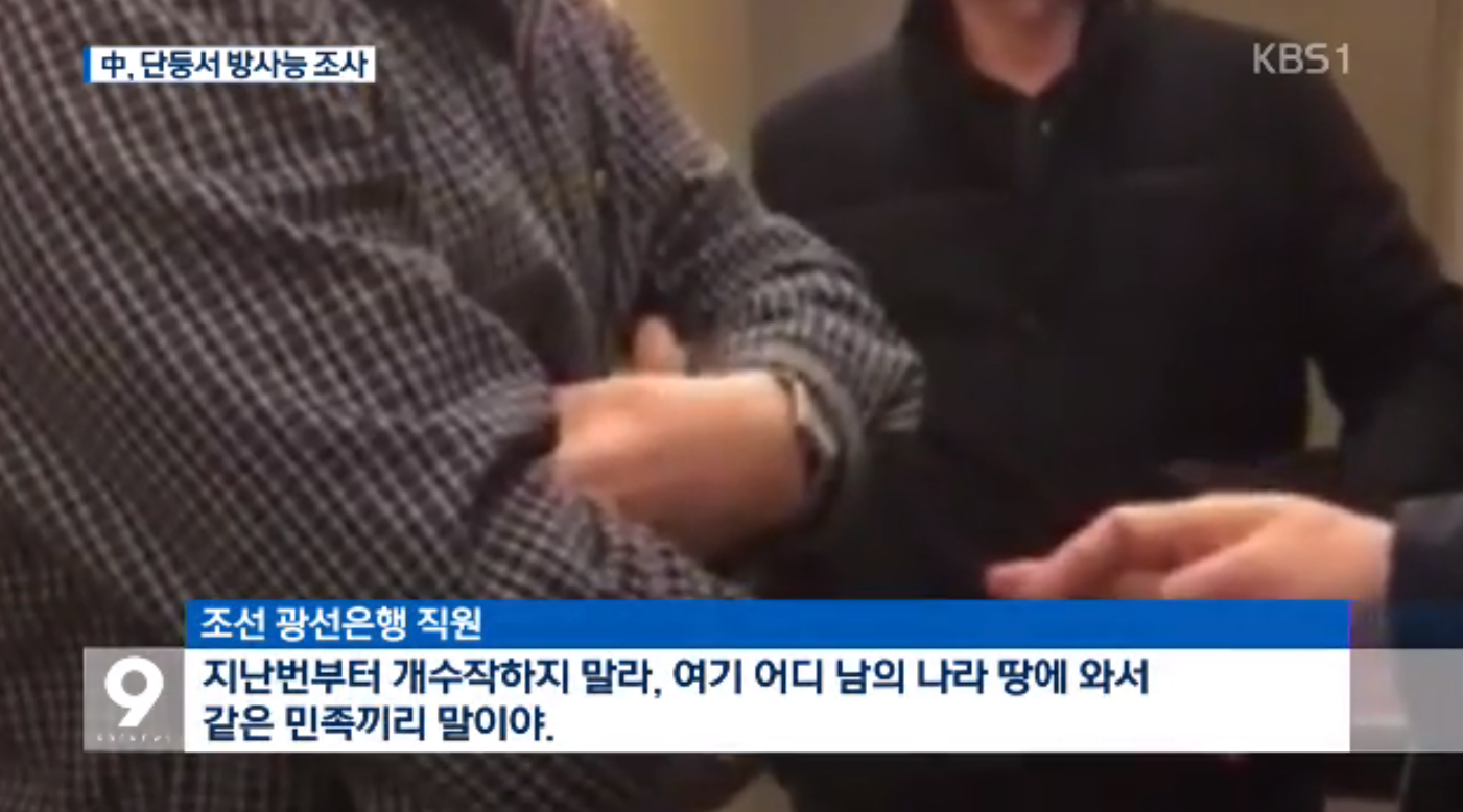
Screen Shot 2016-01-08 at 2.09.16 PMThrough revealing [“재재로”, literally “talkative” or “garrulous”] withdrawals it was discovered that North Korea’s Joseon Gwangseon Bank was again operative. The building security guard, when asked if the building housed the bank, said [again in Chinese] “the North Korean bank is room number 8 on the thirteenth floor.” When asked if anyone was present he said “maybe there’s someone up there, I’ve seen one or two people”. Thus also through the security guard the continued operations of the Joseon Gwangseon Bank were determined. One of the bank’s managers responded to a crowd of reporters with verbal abuse: “Stop all of those silly remarks which [you] have been making.” [While the actual content of this “verbal abuse” is mild, it was delivered via the casual speech style, which is extremely rude to use in professional situations or with anyone but close friends.]

[Working] amidst this very same menacing atmosphere is a North Korean trader. [He believes] that the nuclear tests are natural and fair. “What influence [did the test have on the Chinese environment]? Whether we trade or don’t trade [with China] our nation needs to be self-sufficient and self-reliant. And what?”

Meanwhile at the North Korean border posts Hwanggeumpyeon island on the Yalu river on the barbed-wire boundary between the two countries, no changes have been detected.

*The phrase used in the original is “말을 아꼈습니다” – “being thrifty with words”

Analysis: How much more will China take? Appetite for continued support of North Korea within Chinese power circles must be rapidly approaching rock-bottom. With a plummeting stock market the last thing Beijing needs is pointless belligerence from its misfit neighbour. Perhaps this latest round of testing is in response to some internal instability in the North Korean administration. Regardless, expect to see the usual strong denunciations and equally typical lack of any concrete action from South Korea, Japan, the US and the UN.

Academics vote for a four-character Chinese motto to represent the year 2015: 昏庸無道 (Dark and Dizzying Direction)

Korean President Bak Geun-hye (centre)

Korean President Bak Geun-hye (centre)

Huffington Post Korea

By Gwak Sang-a

A Chinese-character motto for the year 2015 has been selected. From five candidates a committee of 886 academics has picked a result: Hon/yong/mu/do 昏庸無道, which translates as “[the entire world is heading in] a dark and dizzying direction”. The Academic Newspaper explains the phrase in more detail: the first two characters, hun/yong refer to a foolish and incompetent monarch [or elected leader – in this case, President Bak Geun-hye] diverging from the correct path, represented by gong/do. The phrase originates from a description in Confucius’ Analects which discusses “the true path of a high ruler” (cheon/ha/mu/do, 天下無道).

Koryeo University professor Ee Seung-hwan acerbically pointed out the flaws in Bak Geun-hye’s leadership: “At the start of the year the situation with MERS was chaotic, and was not controlled by the government; we saw its incompetence. By mid-year [public] pressure on the ruling party to retire was very damaging to separation of the legal, administrative and judiciary arms and the parliamentary process. Towards the end of the year the government’s history textbook controversy caused another serious situation [the government brought in plans to issue a single history textbook to all state schools, causing massive protest from teachers’ unions and left-wing commentators].”

Analysis: that this piece of news is deserving of a front-page banner on Huffington Post Korea illustrates the regard, at least in theory, with which academics are held in Korea. Academics in the UK or US who announced a Latin motto for a year would hardly expect any media interest. Of course, Chinese characters are still in everyday use in Korean newspapers as supplemental glosses for obscure words which are homophones of more common vocabulary, but most Koreans have little interest in Chinese character education. The real story here is yet another damning inditement of the Bak administration from academics; education unions in Korea lean heavily towards the left and have been stridently critical of Bak’s tenure, not least due to unpleasant memories of the reign of Bak’s father, Bak Jeong-hee, who was ruled as a brutal right-wing dictator from 1961 until his assassination in 1979.

Controversy As Smaller Business [Accuses] “Major Fashion Firm” E-Land Of “Scarf Plagiarism”

Screen Shot 2015-12-11 at 7.43.38 PMKBS News – video

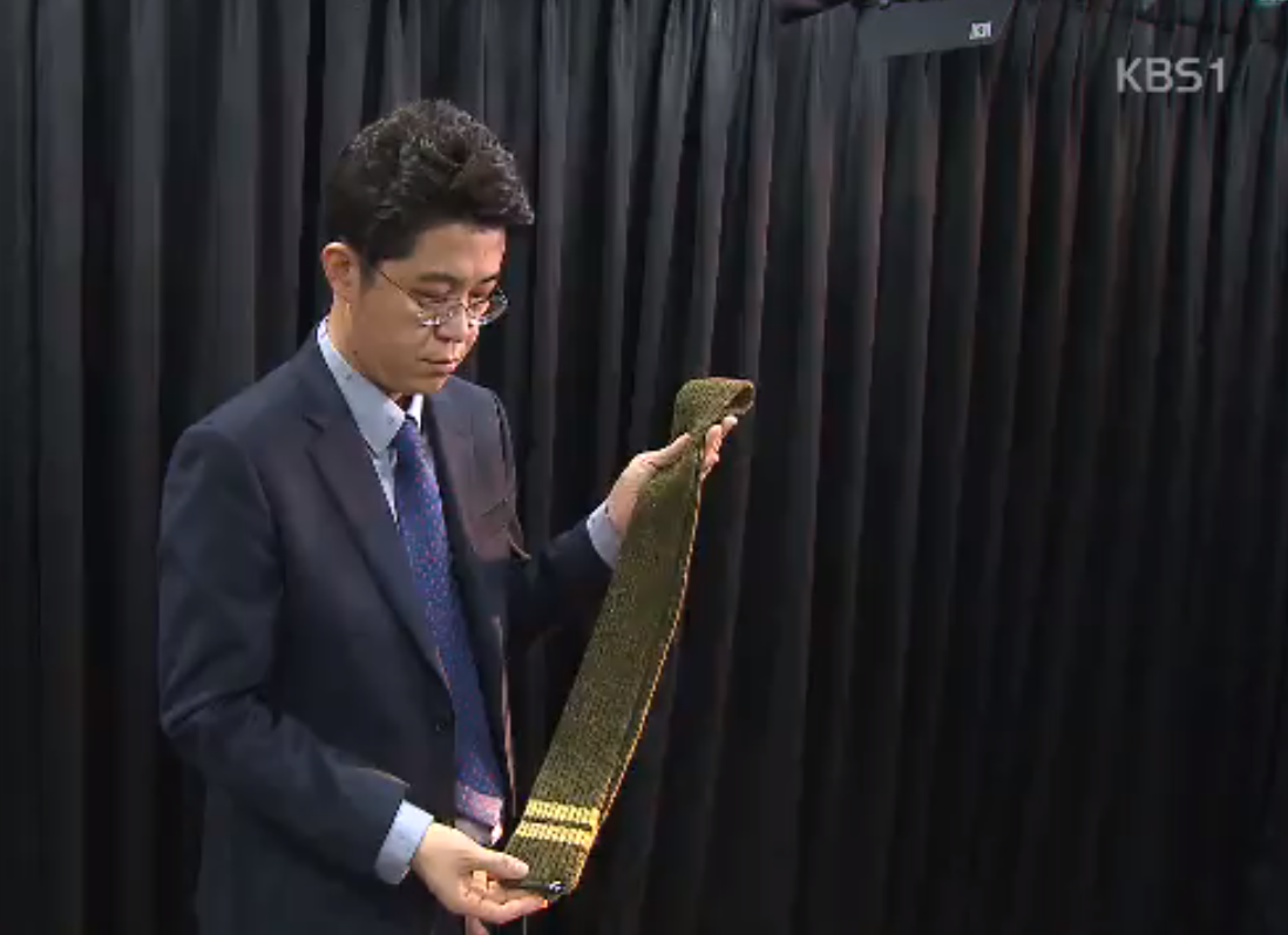
E-Land, a fashion firm with yearly sales of ₩10 trillion [around £2.7 billion], has been enveloped in a controversy, having plagiarised the design of some small- and medium-sized enterprises’ scarves. E-Land had promised to provide settlement money and incinerate the [plagiarised] items, but later changed its promise.

[Reporter] From the start of the second half of the year up until this month E-Land has been selling this scarf. However, this design, released a year ago by a smaller business, has almost exactly the same design.

[Representative of the specialist scarf company]: “The length, the width, the position of the stripes, and the size of the stripes, and the composition of the fibres – it’s all exactly the same.” The specialist manufacturer’s version costs ₩68,000 [£37.50], reflecting its development costs, while E-Land’s version sells for ₩23,900 [£13.20] – a third of the price. The [smaller] company’s annual sales of ₩200 million have taken a big hit.

[Representative of the specialist scarf company]: “It’s been very mentally stressful with retail and wholesale account customers ringing up complaining that the exact same product as their expensive scarf is on sale [for a cheaper price].” As soon as the smaller company complained E-Land sent a notice of agreement [합의안 = notice of compliance, perhaps?]. [E-Land] gave a settlement of ₩5 million [£2,700] and undertook not to violate [the smaller company’s] intellectual property rights again, and to remove from sale and burn all of the problem items.

However later, E-Land’s attitude changed.

[E-Land manager]: “If one looks at the photos, one can see that this scarf [designed by the smaller company] is awfully similar to a lot of other scarves from other brands.”

The controversy continues to engulf E-Land.

Analysis: This news piece highlights the curious disregard for intellectual copyright in Korea. Plagiarism is rampant in all spheres of commercial life – perhaps a legacy of the rote memorisation and subordination of creative endeavour which characterises Korean education. In recent years commercial plagiarism has been challenged more often as Koreans seek to protect their own innovations at home and abroad; to give a recent example an actress has been sharply criticised for copying a fashion designer’s work and passing it off as her own, and K-pop acts are constantly being accused of ripping off other people’s work. Many Koreans are anxious to move away from any perception of their country as one which churns out low-quality imitations.

(The fact that the complaining smaller company is not named in the report may be related to Korea’s idiosyncratic libel laws – even if your accusation is true, it can still be prosecuted as libel if it causes material harm to the entity who is the subject of the accusation. These laws were crafted for use as weapons by dictatorial administrations, but have never been repealed, possibly because they offer innate advantages to powerful and wealthy organisations.)

2,222 Make Up Funeral Committee For Moment of National Unity

24th November 2015

KBS News – video at link

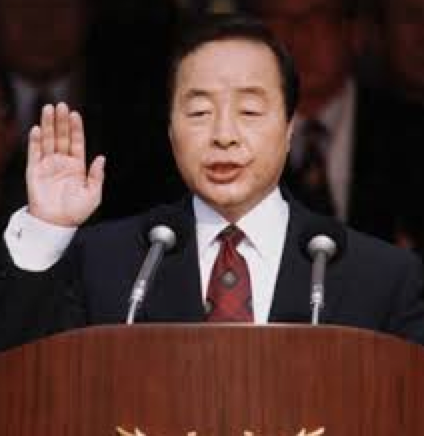
Screen Shot 2015-11-25 at 4.40.55 PMThe national funeral committee for the funeral of former Korean president Gim Yeongsam has been confirmed. Their function is to carry out the wishes of the deceased [with respect to his funeral arrangements] – membership comprises 2,222 persons. Former president Gim Daejung’s funeral committee was a similar size, being just over 2,300 persons. According to convention, chairman [of Gim Daejung’s funeral committee] will take over the role for the Gim Yeongsam funeral. Gim Bongjo, former Democratic congressman and Dong Jihoe, former Vice-President [of Gim Yeongsam’s party] was included in the entourage in accordance with recommendations from the bereaved.

During his term of office president Gim brought [former dictators] Jeon Duhwan and No Taeu to court to stand trial.

Director-General of the UN Ban Gimun has also been invited. 1,004 members of the committee who have been recommended are survivors [of Jeon Duhwan and No Taeu’s dictatorial violence].

Gim Hyeyeong, Director-general for State Protocol at the Ministry of Government Administration and Home Affairs, said “[we] have followed best practice with regard to construction of the membership list [of the funeral committee], having customised the invitee list to reflect the wishes of the deceased’s family.” As the first funeral committee for a national figure to include representatives from various fields of society, its focus has been on integration and unity.

Analysis: as Korea’s first fully-democratically-elected president, Gim Yeongsam holds a special place in the country’s heart. A lifelong opponent of dictatorial rule who made significant personal sacrifices standing in opposition to Bak Jeonghee, Jeon Duhwan and No Taeu, Gim is being deeply mourned by the general Korean public. This article shows the current government’s anxiety to ensure that no criticism can be levelled against them for underplaying Gim’s funeral or anodysing his legacy (the current president, Bak Geunhye, is the daughter of previous dictator Bak Jeonghee) – by publicising the list of members of the funeral committee, which includes others who suffered during Korea’s ling struggle for democracy and has been influenced by Gim’s family, the current administration hopes to head off any potential criticism of the proceedings. More broadly the article also highlights the fact that the funerals of public figures are open to exploitation by powerful influences.

1,500 year old Baekje wooden fortress uncovered

Naver News

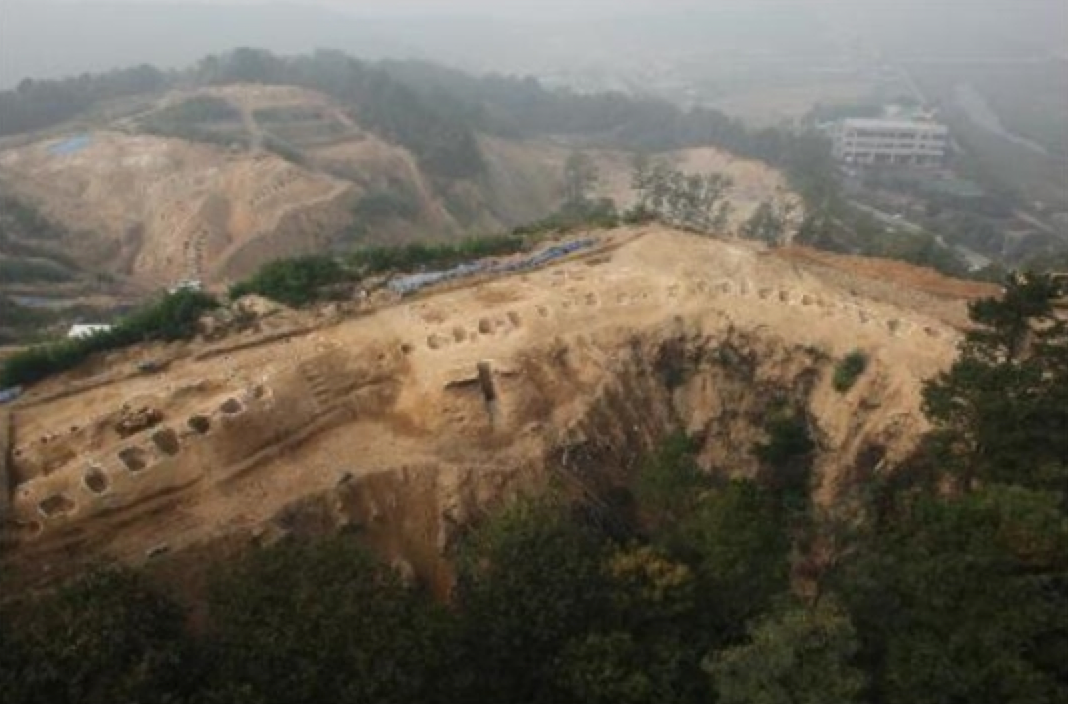
Screen Shot 2015-11-03 at 2.07.10 PMIn Anseong in Gyeonggi province a Baekje wood-walled castle, built between the 4th and 6th centuries, has been discovered. The fortress’ purpose was the block Goguryeo soldiers. Since September the Historical Culture Revival and Protection Association has been undertaking an excavation investigation in the neighbourhood of Dogi in Ansang city, with the result that traces were found of the barriers of the wood-walled castle.

The castle’s position abutting the foothills and the Anseong river provided defences, with 4 sections each running about 130 metres in length. [This structure] is one of the first heaped-earth fortresses with a framework made from the wooden stake barriers erected around it. Catching the eye is the interior built from a single row of earthworks and the exterior built from two rows of earthworks. The gaps between the laid woodpiles is around 4.5m – 5.5m. This toru style of earthwork is characterised by empty space dug behind it like a staircase, carved out of the outer surface of the hill – layered clay lumps [behind it] increase the strength of the wall.

Earthenware pottery, dishes and so on have been excavated from the mounds behind the fences, exhibiting the short neck and lid typical of the gupdari style from the 3rd-4th century of Baekje. A researcher said “up until the fourth century the framework and excavated remains are Baekje, but after this point a Goguryeo army seems to have occupied the castle; it has been possible for the first time to specifically gauge the structure of a Three Kingdoms barrier facility, so this ruin has been evaluated as being very important.”


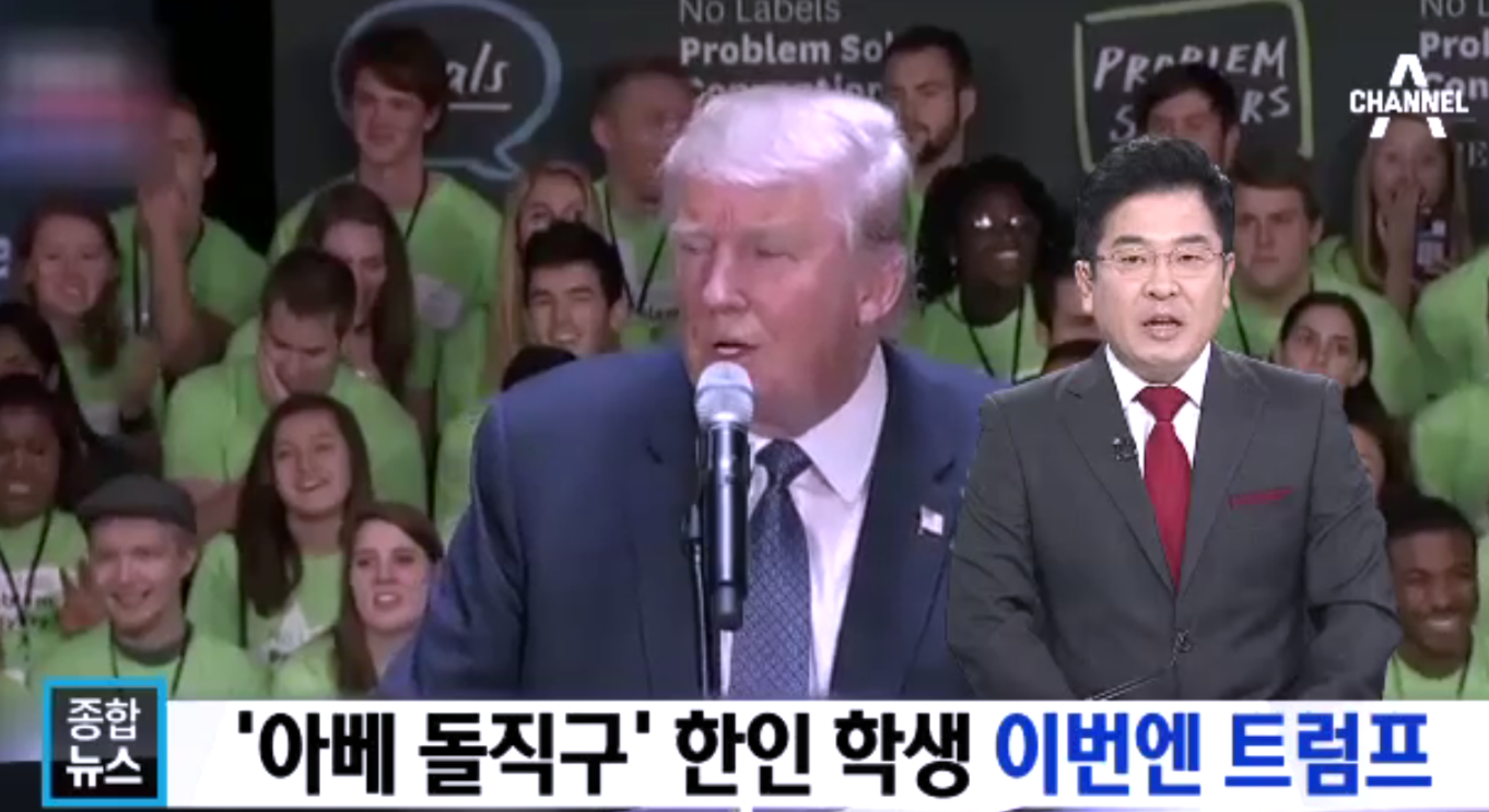
Ethnic Korean student “Abe straight-shooter” targets Trump

Screen Shot 2015-10-14 at 8.30.56 PM13th October 2015

Channel A News

Video at link

Republican presidential election front-runner Donald Trump has spread his opinion that Korea [the text uses the common phrase “our country”, 우리 나라/uri nara] receives national defence assistance from the US for free. He had to cope with a rebuke from a Korean-descent student.

Six months ago the same student also threw a hardball comment towards the Japanese prime minister, Shinzo Abe.

Trump attended a political event. A Korean-American student threw a difficult question [literally a “gimlet”] towards him. Joseph Choi, a second-generation gyopo, said “Korea is not just a burden on the US defence forces, as you argue – the truth is different.” At that time a flustered Trump lost the flow of his speech and asked [Choi] about [his] nationality, with Choi hitting back straight away. Trump asked “you’re a Korean, aren’t you?” Choi responded “No. I was born in Texas and grew up in Colorado.” Not having realised that Choi was a US citizen, Trump again tried to put a damper on his comment. Choi continued “it doesn’t actually matter where I’m from, what I’m saying is correct. Every year Korea contributes $861 million [to the defence effort].” Trump spoke again, downplaying [Choi’s comment], saying that Korea’s contribution to the defence burden was only a small proportion of the total cost. “The amount they pay is insignificant. Wait a minute, wait a minute – it’s only a small contribution. If we compare it to the amount it costs, it’s only a small amount. It’s a small amount.”

Screen Shot 2015-10-14 at 8.31.24 PMMr Choi, a fourth-year student at Harvard, had Japanese premier Shinzo Abe at a loss as to what to do when Abe visited the US in April. Choi asked “even with all the proof, why will you still not acknowledge that hundreds of thousands of women were forced into sex slavery [during the the Japanese colonial period, by Japan]?” Through his brilliant mind Choi has become president of a combined Harvard-Princeton North Korean human rights student organisation and a political research group.

Analysis: this piece reflects something of the hierarchical nature of Korean society – it would be almost unthinkable for a native Korean young person to grill prominent public figures with such tough questions, and so Koreans feel proud and probably slightly scandalised that one of their own is speaking truth to power so effectively. Here we also see the second point of this story: although Choi made Trump look silly by confirming that he is a natural-born US citizen, he was being somewhat disingenuous by taking Trump’s question completely literally, as in both Korea and the US one’s ethnic heritage is enormously important. The fact that the Korean coverage mentions Choi’s status as a “second-generation Korean-American” and Choi’s own obvious interest in issues pertaining to Korea is proof of the same. Additionally during his comments to Abe, Choi talked about Korea being “his” country. (Choi’s exchange with Abe is well worth a watch, to see the Japanese politician attempting to cope with conditions outside of the tightly-controlled Japanese news media.) The article also probably exaggerates Trump’s reaction; he is an enormously practiced public speaker who is adept at dealing with hostile questions, and in the grand scheme of things Choi’s comments were made politely, nor did they destroy the basis of Trump’s point.


International marriage conflict

3154959_b9YSunday September the 27th

KBS News

Article by Yun Ji-yeon

During international matchmaking, “men conceal their jobs while women conceal their family relationships”

Korean men and foreign women are confronting each other through mediation services regarding the situation of the men’s jobs and the women’s relationships with their families. A survey by an international marriage brokerage shows that, in the last three years since 2012, among 800 men surveyed 16.8% of them and among 402 female marriage immigrants surveyed 8.1% of them had received information about their spouse [before marriage] which turned out not to be true. The situation for men was that information about their spouse’s dependent children and care for their parents [had not been provided accurately] and for women their spouse’s earnings and job were cited [as information which had not been accurately provided].

Because of this 39.7% of the male [survey respondents or of those who had experienced problems? The Korean is not clear] and 26.2% of the female respondents [ditto] had experienced conflict in their marriages.

According to the laws governing international marriage brokerage, from 2010 marriage brokerages have been required to furnish spouses with personal information concerning the situation of those they are introduced to.

Analysis: for many rural Korean men, their only realistic prospect of marriage is getting married to a woman from a developing nation looking to emigrate to Korea. Traditionally oldest sons of a family bear the responsibility for care of parents in old age, and so many rural men are forced to remain in the countryside while young women typically head for the opportunities offered in big cities. Women from countries including China, the Philippines, Cambodia, Vietnam and Mongolia have entered into agency-brokered marriages in significant numbers over the last ten years, but as the article makes clear these unions are by no means guaranteed to be happy.

Apart from all the issues mentioned in the article, and the obvious problems one might expect with a marriage entered into on the basis of a short correspondence or brief face-to-face meeting, there are several specific attributes to Korean-international rural marriages which have led to high rates of divorce, domestic violence and reported unhappiness. Many of the women from other Asian countries travelling to Korea are avid fans of Korean music and television, and have therefore based their impression of Korean men on the sensitive and charming characters they’ve seen and listened to. Finding themselves in a relationship with a conservative rural man who may not have had much experience with women – and who expects them to take care of his ageing and equally-conservative parents – often comes as an unpleasant shock. The key role of alcohol as a recreation and stress-valve in Korean life tends to exacerbate these problems. Korean husbands, for their part, are often frustrated and disappointed with their new wives’ slowness at learning the Korean language and mastering the dizzying array of social conventions which accompany life there. Additionally, while attitudes are changing, many Koreans still frown on mixed-heritage marriages and aren’t slow to make their opinions known. (However, mixed-race children are much more common in rural schools than in big cities, due to this ongoing demographic trend of international marriage by rural Korean men. Some rural schools have a majority of mixed-race students.)

Mother of the Itaewon Murder Incident [Victim] Speaks

Ee Bok-su, mother to murder victim Jo Jong-pil

Ee Bok-su, mother to murder victim Jo Jong-pil

22nd September 2015

Mother of the Itaewon Murder Incident [Victim] Speaks: “Evil people are living more happily than I am”

(Original post from Huffington Post Korea)

“I think I’ve been living waiting for this day to come,” said Ee Bok-su, mother of the victim, when she heard the news that cited perpetrator Arthur John Patterson, 36, had finally been brought back domestically [ie, to Korea] to pay for his crimes. “At first I thought ‘I have to keep living’, but I wasn’t sure if I could live for [even] two or three more years. In the end it seems like I held on because the case wasn’t finished.”

When Mrs Ee heard the news about Peterson’s repatriation, she said in a statement to Yeonhap News on the 22nd of September that “the killer came and killed, so he should pay the penalty. I don’t want to see him get the death penalty – yet he should get life imprisonment so that he does not kill anyone else out in society”.

Jo Jong-pil

Jo Jong-pil

Mrs Ee said of her sacrificed* [희생된] son: “he never fought during his childhood, not even once, and never once did a curse word cross his mouth… he had a promising future but the murder has ruined all of that”, she said, bursting with rage.

After the murder of Mr Jo [his] family have continually gone though hardship. The anger felt by Mr Jo’s father after the incident has increased but has not consumed him. He is still reluctant to speak about the incident. While Mrs Ee was dealing with the news of her sons’s death she also underwent hip surgery, and she also suffers from knee pain. “My child has been killed. Who could properly deal with that?” she sighed. If Patterson returns “I will definitely be at the court right up until the final judgement,” she said.

Mr Jo was found dead, having been stabbed with a knife, in a hamburger restaurant in Itaewon on the 3rd of April 1997.

Analysis: The Itaewon Hamburger Restaurant Murder (이태원 햄버거 가게 살인 사건) was a crime in 1997 which shocked Korea. A 22-year-old, Jo Jong-pil, was stabbed repeatedly in the toilet of Itaewon Burger King in an unprovoked attack, allegedly by 17-year-old Arthur Jon Patterson. (Itaewon is a central district of Seoul known as a hub for foreigners.) Patterson, a US-Korean dual national, fled to the US the day afterwards. Only now has he been extradited. Random violent crime in Korea is extremely rare (although the country has a significant problem with domestic violence) so the brutality of Jong-pil’s death has given the incident a grim persistence in the country’s imagination.

Arthur John Patterson

Arthur John Patterson